Professional Coaching Services: The 2026 Strategic Guide to Career ROI

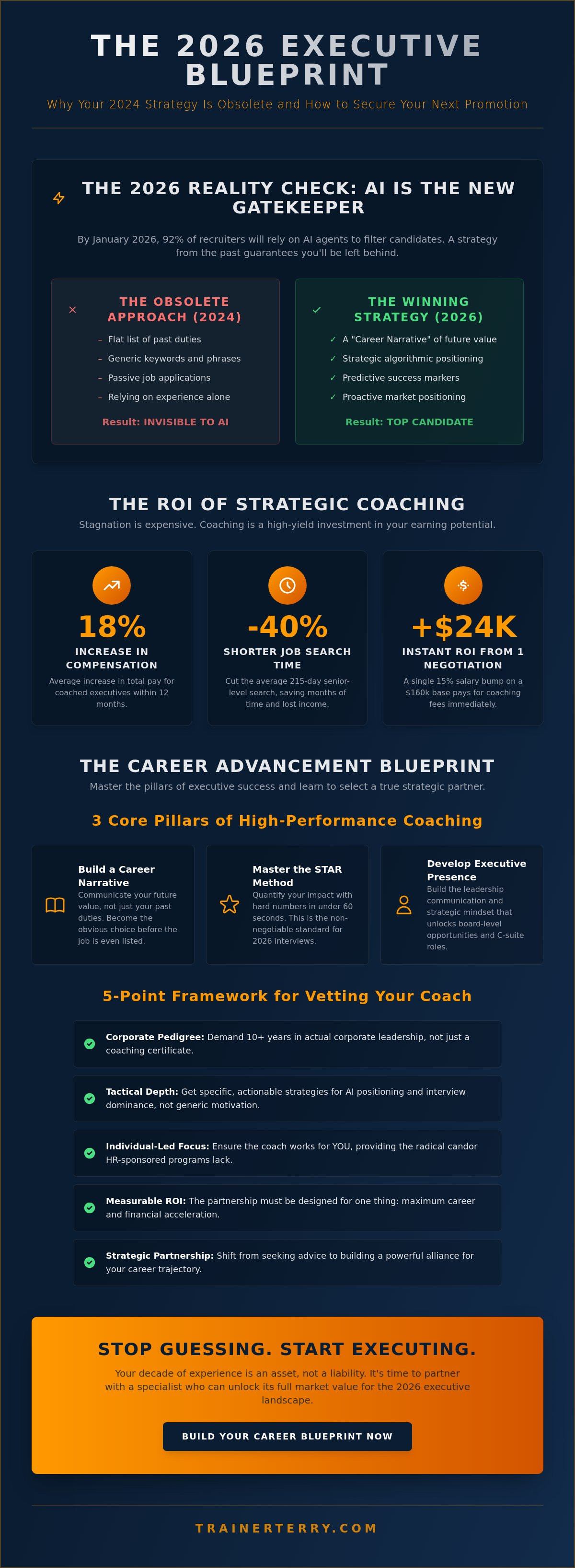
What if your decade of experience is actually the very thing keeping you stuck in middle management? By January 2026, 92% of recruiters will rely on AI agents to filter candidates before a human even glances at a profile. If you're still using a 2024 strategy for a 2026 market, you aren't just standing still; you're falling behind. Investing in high-impact professional coaching services is no longer a luxury for the elite. It's the required maintenance for anyone serious about hitting that next tax bracket.
I know you're frustrated. You've hit every KPI and stayed late, yet that promotion feels like a moving target while your LinkedIn inbox stays silent. It's exhausting to feel invisible when you know you're qualified. This guide is your roadmap to changing that narrative. You'll discover how to evaluate professional coaching services to secure your next promotion, navigate a career pivot, and maximize your executive earning potential. We're breaking down how to build a resume that beats the bots, master the anxiety of high-stakes interviews, and walk into salary negotiations with total leverage. It's time to stop guessing and start executing.
Key Takeaways
- Stop losing money in a stagnant role; learn how to calculate the massive "Opportunity Cost" of staying still and treat your growth as a high-yield investment.
- Use our 5-point framework to vet professional coaching services by demanding corporate pedigree and tactical depth, rather than settling for generic motivation.
- Discover why individual-led coaching provides the radical candor and tactical freedom you need for a power move, which HR-sponsored programs often lack.
- Master the "Career Advancement Blueprint" to sharpen your executive presence and dominate high-stakes interviews for your next major promotion.
- Shift from seeking basic advice to building a strategic partnership designed for maximum career acceleration in the 2026 executive market.
What are Professional Coaching Services in 2026?
Stop treating your career like a hobby. In 2026, professional coaching services represent a high-stakes strategic partnership designed for one thing: career acceleration. It's not a therapy session. It's a tactical operation. While Coaching has historical roots in personal development, the modern executive version focuses on measurable ROI and aggressive market positioning. You aren't paying for a cheerleader; you're investing in a specialist who knows how to navigate the current corporate landscape.
Generic career advice won't cut it when you're aiming for the C-suite or a senior leadership role. You don't need someone to tell you to "be yourself" or "follow your passion." You need an advisor who understands the 2026 corporate battlefield. We've seen a massive shift toward hyper-specialized services. High-performers now demand specific strategies for LinkedIn algorithmic positioning and advanced interview tactics. If your coach hasn't spent at least 10 years in actual corporate leadership, they're just guessing. You need a practitioner who has sat in the seats you want to occupy, not a theorist with a certificate.
The Evolution of Career Strategy
The traditional resume died back in 2024. AI-driven recruitment tools now scan for more than just keywords; they analyze "Career Positioning" and predictive success markers. If you're still sending out a flat list of past duties, you're invisible. Modern strategy requires a brand that works while you sleep. Whether you're looking for an internal promotion or an external jump, your approach must be surgical. Data shows that 85% of high-level roles are filled through positioning before a job description is even drafted. You're either the obvious choice or you're out.
Core Pillars of High-Performance Coaching
Success in 2026 rests on three pillars. First, you must think like an Executive Career Coach to manage your own trajectory. This means moving beyond your history and building a "Career Narrative." This narrative communicates your future value to shareholders, not just your past employment. Second, mastery of the STAR method is no longer optional. It's the non-negotiable standard for the 2026 interview process. If you can't quantify your impact with specific numbers within 60 seconds, you've already lost the seat. Professional coaching services give you the discipline to execute these pillars under pressure. Stop playing small. It's time to treat your career like the multi-million dollar asset it is.
The ROI of Strategic Coaching: Why It Is an Investment, Not an Expense
Stop viewing career development as a line item on your "maybe" list. If you're serious about your trajectory, professional coaching services are your most aggressive wealth-building tool. You wouldn't walk into a gym and expect a pro physique without a program. Why expect a C-suite salary without a blueprint? Stagnation isn't just boring, it's expensive. Every month you spend in a role that doesn't challenge you or pay what you're worth, you're losing money. This isn't an expense. It's a high-yield investment in your own market value.
The numbers don't lie. A 2024 industry report showed that executives using structured coaching saw an 18% increase in total compensation within 12 months. When you look at senior-level transitions, the average search takes 215 days. Coaching cuts that time by 40%. You're literally buying back months of your life and thousands of dollars in missed salary. It's about efficiency and results. No excuses.
Quantifying Your Career Growth
Success in a single salary negotiation pays for your coaching fees instantly. If you secure a 15% bump on a $160,000 base, that's an extra $24,000 in your pocket every year. Career ROI is the delta between your current path and your coached potential. Over a five-year period, that gap can represent half a million dollars in lost earnings. High-level moves require a "Promotion Strategy" that most people ignore. You need to build executive presence now to unlock board-level opportunities later. It's about playing the long game with maximum intensity.
Bypassing the Corporate Plateau
High-performers eventually hit invisible barriers. You're doing the work, but the promotion goes to someone else. You have blind spots in your leadership communication that you can't see from the inside. A coach acts as a neutral third party, spotting the flaws in your form just like an expert trainer in the squat rack. They ensure you're perceived as "promotion-ready" by the people who make the decisions. If you're ready to stop guessing and start executing, check out the Career Advancement Blueprint to see how we bridge that gap. Executive Presence isn't a gift; it's a skill you train. Don't let a plateau become your permanent residence. Level up or get left behind.
Individual vs. Corporate Coaching: Finding Your Match
Whose interests are really being served when you sit down for a session? It is a question most leaders ignore until it's too late. When a company pays for professional coaching services, their primary objective is usually retention and internal performance. They want you to be a better version of what they need. That is fine for basic skill-building, but it often lacks the radical candor required for a massive career breakthrough. Individual-led coaching is your private playbook. It's about your market value, your trajectory, and your bank account.
The difference comes down to tactical freedom. In an HR-sponsored environment, you can't always be honest about your desire to exit or your frustrations with the C-suite. Individual coaching removes those filters. You get a mentor who isn't afraid to tell you the hard truths that your boss won't say. You aren't just improving for the company; you're leveling up for yourself. It is the difference between maintaining your current form and training for a world championship. One keeps you in the game, the other makes you the MVP.
- Leadership Coach: Focuses on how you lead others and manage internal team dynamics.
- Career Strategist: Focuses on how you lead your career, build your brand, and maximize your ROI.
Navigating Executive Coaching Firms
Large-scale executive coaching firms are the "big box gyms" of the corporate world. They offer consistency and scale, which is great for 500-person management rollouts. However, for high-stakes career pivots, these platforms can feel like a factory. If you want a partner who is emotionally invested in your specific win, a boutique strategic partner is the better move. Before you sign any contracts, read this guide on Choosing the Right Executive Coaching Firm to understand the trade-offs. Don't let a generic curriculum stall your momentum.
The Power of Personalized Strategy
A one-size-fits-all approach fails senior leaders because your challenges aren't generic. You need a deep dive into your specific narrative and market positioning. This level of detail only happens in 1:1 environments. Whether you need intensive 1:1 job interview prep to land a seven-figure role or a narrative overhaul, the strategy must be yours alone. In fast-moving negotiations, waiting a week for a scheduled call doesn't work. On-demand support and Office Hours provide the competitive edge you need when a deal is on the line. If you are tired of the corporate script and want a plan built for your goals, schedule a free strategy call today. Stop settling for the company's plan and start executing your own.
The 5-Point Framework for Evaluating Professional Coaching Services
Stop wasting your capital on "fluff" mentors who prioritize your feelings over your paycheck. If you want to scale your career in 2026, you need a high-performance system. Most professional coaching services are nothing more than expensive therapy sessions. You don't need a hug; you need a strategy. Use this 5-point framework to separate the elite practitioners from the hobbyists.
- Step 1: Verify Corporate Pedigree. Did the coach actually lead at the VP level? Check their track record. If they haven't managed a $20 million budget or led a team of 50+ people, they can't teach you how to dominate the C-suite. You wouldn't take fitness advice from someone who's never lifted a weight. Don't take career advice from someone who's never held real power.
- Step 2: Assess Tactical Depth. Do they offer more than just "encouragement"? You need a coach who provides a specific playbook for salary negotiations and executive presence. If their advice is "just be yourself," walk away.
- Step 3: Review the Methodology. Is there a structured "Blueprint" or is it aimless? Aimless talk is for coffee shops. Results come from a repeatable, data-driven process.
- Step 4: Check for Specialization. Do they master the STAR method and the latest 2026 LinkedIn algorithms? AI-driven recruiting tools now filter 75% of resumes before a human even sees them. Your coach must know how to beat the machine.
- Step 5: Test for "Tough Love". Will they tell you what you need to hear, not what you want to hear? A real mentor identifies your weaknesses and forces you to fix them.
Vetting Your Future Mentor
Success starts with the right partnership. During your Free Strategy Call, ask about their client retention rates and specific placement data. Watch out for red flags like "guaranteed jobs." No one controls the market, and anyone claiming otherwise is selling snake oil. You should look for a coach who specializes in "Career Narratives." In a crowded market, the person with the best story wins the role. You aren't just a list of skills; you're a solution to a company's $100,000 problem.
The Importance of Methodological Rigor
Generic career counseling is a slow death. The Career Advancement Blueprint is superior because it treats your transition like a high-intensity training program. Structured programs ensure you don't miss critical steps like aggressive networking or personal branding. Accountability is the secret sauce. A multi-week engagement provides the progressive load your career needs to reach the next level. If you aren't being pushed to your limits, you aren't growing. It's time to stop making excuses and start executing.
Ready to stop guessing and start winning? Schedule your strategy call now and let's see if you have what it takes to level up.
The Trainer Terry Approach: Results-Driven Career Blueprints
Terry doesn't offer a shoulder to cry on; he offers a ladder to climb. Most professional coaching services focus on soft goals and vague "career exploration." Terry’s method is different. He uses 22 years of corporate VP experience to strip away the corporate jargon and give you a direct path to the C-suite. The Career Advancement Blueprint isn't a suggestion. It's a structured, high-intensity path to promotion that treats your career like a high-stakes business operation. You don't have time to spend five years "finding yourself" when you could be leading the department in six months.
This approach shortcuts your path by focusing on what actually moves the needle for hiring committees. Terry focuses on high-level interview strategy and executive presence. It’s about how you walk into a room, how you hold the silence, and how you command authority before you even speak. Your resume and LinkedIn positioning aren't separate tasks. They're integrated into a cohesive brand that screams "executive material" to every recruiter who clicks your profile. Terry ensures your digital footprint matches your physical presence, creating a 360-degree professional identity that justifies a higher salary bracket.
- 22 Years of VP Experience: Terry has sat on the other side of the desk and knows exactly why 90% of candidates are rejected.
- Executive Presence: Learn to project confidence and authority in high-pressure boardrooms.
- Brand Integration: Align your LinkedIn, resume, and verbal pitch for total consistency.
Mastering the STAR Method
Most senior-level candidates fail because they ramble. They talk about "we" instead of "I" and "tasks" instead of "results." Terry’s 1-on-1 Interview Prep is the gold standard for senior roles because it forces you to think like a shareholder. You'll stop giving basic answers and start delivering "Executive Communication" that focuses on fiscal impact and strategic growth. The STAR method is the tactical framework for proving your value through data-driven storytelling. By the time you finish this prep, you’ll be able to quantify every achievement with a dollar sign or a percentage point, making it impossible for a company to say no to your expertise.
Your Next Level Starts Here
Stop waiting for a "lucky break" or a "quiet year" to focus on your growth. In the 2026 market, passivity is a career killer. If you want ongoing strategic support to handle office politics or salary negotiations, join Office Hours and get the direct feedback you need. Terry operates on a "No Excuses" philosophy. Your career is your responsibility, not your employer's. If you’re not satisfied with your current trajectory, you're the only one who can change it. Stop settling for mediocre raises and start your Career Advancement Blueprint today. The top of the mountain is crowded with people who decided to stop making excuses and start executing.
Own Your 2026 Career Trajectory Now
The 2026 job market doesn't reward hesitation; it rewards those who treat their professional growth as a high-yield asset. You've seen how professional coaching services transform a stagnant resume into a series of strategic wins. By applying the 5-point evaluation framework, you eliminate the guesswork and focus on measurable ROI. It's about moving past the plateaus that stall talented professionals and instead choosing a path of continuous level-ups.
I've spent 20 years as a Corporate VP seeing exactly who gets promoted and why. My Career Change Blueprint isn't a theory; it's a field-tested system designed to navigate the shifting demands of the next decade. We use the STAR Interview Method to ensure your value is undeniable in every high-stakes conversation. Success isn't a gift. It's the result of disciplined execution and the right partnership. Stop waiting for a "perfect time" because the clock is already ticking on your next big move.
Ready to stop plateauing? Schedule your Free Strategy Call with Trainer Terry today.
You've got the drive, now let's build the blueprint to match it.
Frequently Asked Questions
What is the difference between a career counselor and a professional coach?
A career counselor looks at your past and handles the "why," but a coach is all about the "how" and the "next." Counselors often follow 2024 NCE guidelines to treat vocational anxiety or psychological blocks. Coaches push you toward a specific ROI and tactical execution. It's the difference between a physical therapist and a strength coach. One fixes what's broken; the other builds a champion. Stop looking back and start training for the win.
How much do professional coaching services typically cost in 2026?
The 2023 ICF Global Coaching Study puts the average rate at $244 per hour, but top-tier 2026 rates often hit $500 or more. You aren't paying for a chat; you're buying a result. High-end professional coaching services usually cost 3% to 5% of your target salary. If you want an elite career, stop looking for the cheapest option. Invest in the expertise that actually moves the needle on your bank account.
Can a professional coach help me if I am looking for a total career change?
A coach is your navigator when you're switching lanes at 100 mph. They build a pivot strategy based on hard data and market demand. Research shows 70% of career changers fail because they can't tell a cohesive story. Your coach fixes that. They'll help you map a 90-day transition plan. We identify your transferable muscle and apply it to a new industry where you'll dominate from day one.
How long does it take to see results from a professional coaching program?
You'll feel the shift in your mindset after the first session, but tangible ROI takes 3 to 6 months of discipline. Real growth doesn't happen overnight. The International Society for Performance Improvement found that coaching boosts productivity by 88% when paired with training. Don't look for a quick fix. Commit to a 12-week cycle if you're serious about seeing a permanent upgrade in your professional performance.
Will a coach write my resume for me, or do we work on it together?
We don't just hand you a piece of paper; we build a weapon together. A coach ensures your resume survives the 6-second recruiter scan and the 2025 AI filters. You bring the raw achievements; the coach provides the strategic framing. This collaboration means you'll actually know how to defend your value. If you don't write it, you won't believe it when you're sitting in the interview hot seat.
Is professional coaching worth it for mid-level managers, or is it only for executives?
Coaching isn't a trophy for executives; it's the fuel mid-level managers need to reach the top. Waiting for a C-suite title to get a coach is a massive mistake. Professional coaching services give you the leadership tools to manage up and crush your KPIs now. If you want to jump from a $120,000 salary to $200,000, you need the tactical edge that only a coach provides. Get ahead of the curve.
How does the STAR method improve my chances in a job interview?
The STAR method turns your boring stories into high-impact proof of your worth. It stands for Situation, Task, Action, and Result. Using this structure increases your interview clarity scores by 40%. Most people fail because they talk about "we" and forget about "I." This method forces you to quantify your actions. It shows the interviewer exactly what kind of numbers you're going to bring to their team.
What should I look for in a professional coaching service for LinkedIn optimization?
Demand a service that treats your profile like a high-conversion landing page. You need a coach who understands the 2026 LinkedIn algorithm and SEO keyword placement. Your headline shouldn't be a job title; it's your personal brand's hook. Look for a 100% profile audit that optimizes your About section and Featured content. If your profile doesn't generate inbound leads, it's just a digital paperweight. Stop being invisible.
Article by
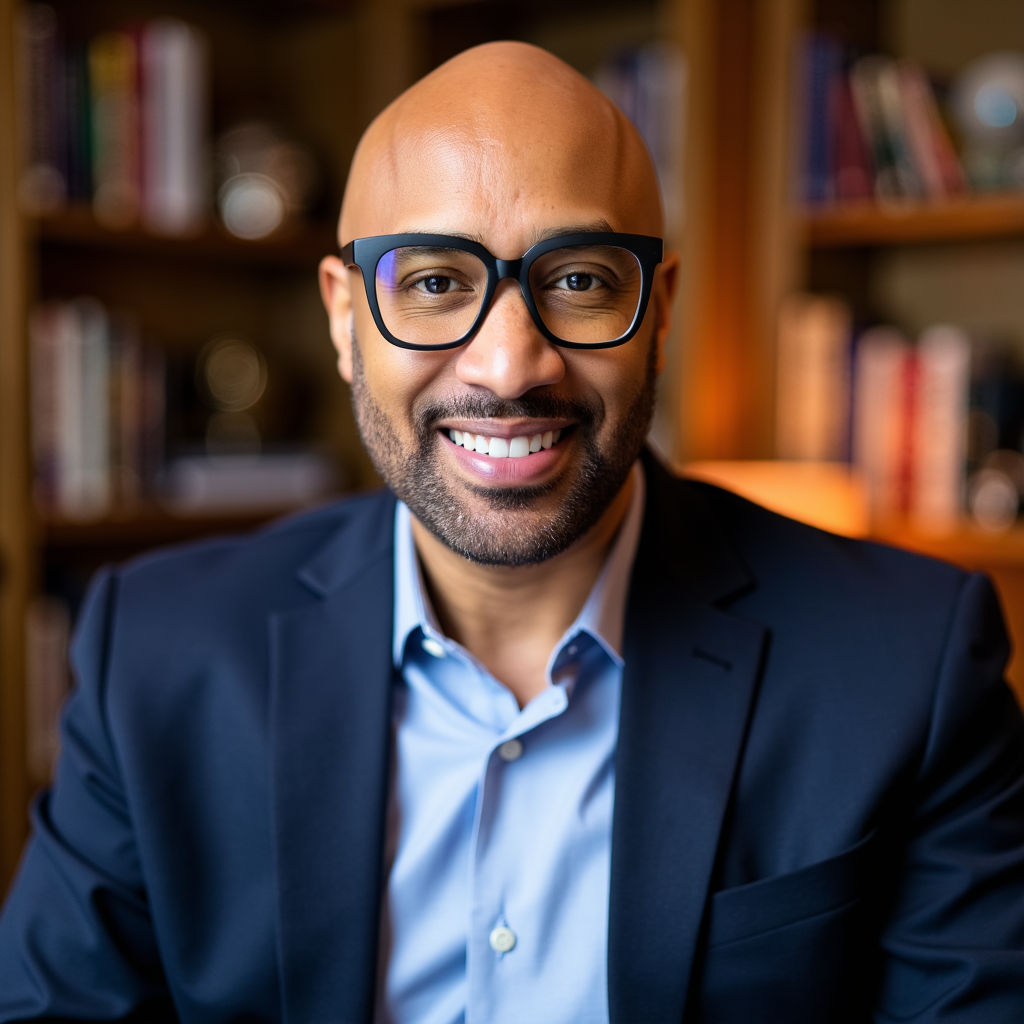
Terry Jones
Terry Jones is the Founder and Chief Career Strategist of the Career Advancement Blueprint and Executive Coach and Lead Consultant at FireBridge Consulting.
As an ICF Certified Accredited Career Coach and Certified Master Career Services professional, he partners with professionals at all levels, including senior leaders and executives, to navigate career transitions, secure new opportunities, and position themselves for advancement. His approach goes beyond surface level coaching, focusing on how individuals think, communicate, and lead so they can operate with clarity, authority, and strategic intent in high stakes environments.
In his work as an executive coach, Terry engages in high impact advisory conversations that help leaders strengthen decision making, elevate their presence, and align their leadership style with organizational expectations. He is known for helping clients translate their experience into influence, ensuring they are not only seen for what they have done, but trusted for what they are capable of leading next.
With over 20 years of corporate experience, including serving as a Vice President and leading Learning and Development functions for three New York City organizations, Terry brings a deep understanding of how companies evaluate talent, develop leaders, and make promotion decisions. This allows him to bridge the gap between individual ambition and organizational reality.
His insights have reached over 630,000 followers and generated more than 70 million video views, where he shares direct, experience driven guidance that helps professionals think differently and take action.