Navigating Corporate Politics Without Being Unethical: The 2026 Executive Strategy

Stop waiting for your results to speak for themselves. In the high-stakes corporate world of 2026, silence isn't a virtue; it's a career bottleneck. You've likely watched less-qualified peers land the corner office while you're left wondering when your hard work will finally be noticed. It's frustrating to feel invisible, especially when you refuse to "play dirty" to get ahead. The good news is that navigating corporate politics without being unethical isn't just possible. It's the most effective way to build a legacy of high-impact leadership.
I know you value your integrity. You don't want to be a "snake," and you shouldn't have to be. Let's reframe politics as Strategic Relationship Management. This is a vital skill for any serious professional who wants to turn individual effort into organizational impact. This article provides a clear framework to build influence capital, gain recognition from senior stakeholders, and secure your next promotion. We'll look at why ethical companies outperformed their peers by 8.2 percentage points this year. You'll learn exactly how to apply those principles to your own Career Advancement Blueprint. Let's get to work.
Key Takeaways
- Stop treating office dynamics as a moral failure and start viewing them as the strategic flow of power you must master to drive results.
- Master the art of navigating corporate politics without being unethical by focusing on reciprocity and building a bulletproof brand of reliability.
- Ditch the "too busy for coffee" mindset and learn why executive presence is just as critical as your technical performance in 2026.
- Apply the "North Star" check to ensure every strategic move you make aligns perfectly with your integrity and organizational goals.
- Get a clear roadmap for your next promotion with the Career Advancement Blueprint, moving from a silent high-performer to a recognized executive leader.
Stop Avoiding Corporate Politics: Reframing Influence as a Professional Skill
Many high-performers treat office dynamics like a dirty secret. They keep their heads down, focus on the spreadsheets, and wait for a reward that never arrives. If you think staying out of the "game" is a moral victory, you're wrong. It's a strategic failure. By refusing to engage, you aren't being more ethical; you're just becoming invisible. You're leaving the direction of your career, and your team's success, in the hands of those who are willing to speak up. Real leadership requires you to step into the arena.
A foundational understanding workplace politics reveals that it's simply the informal flow of power and communication. It's the "connective tissue" of any organization. In 2026, this influence is more vital than ever. In our fragmented, hybrid work environments, you can't rely on accidental hallway encounters to build trust. You must be intentional. There's a massive difference between "Destructive Politics," which is self-serving and manipulative, and "Constructive Influence," which is mission-serving. One destroys culture; the other accelerates results. Mastering the latter is the only way to ensure your best ideas actually see the light of day.
The Myth of the Meritocracy
We've been lied to. We were told that if we worked hard, we'd get promoted. The truth is that hard work is just the entry fee. Your technical output only accounts for a fraction of executive decisions. The "Visibility Gap" is the distance between what you've actually achieved and what senior stakeholders perceive you've achieved. If they don't see it, it didn't happen. Meritocracy is a baseline, not a ceiling, for executive growth. To move up, you must close that gap by ensuring your impact is recognized by the people who hold the keys to your next level.
Politics vs. Strategic Relationship Management
Let's drop the "ick" factor. Start thinking about navigating corporate politics without being unethical as "Strategic Relationship Management." This isn't about being fake. It's about using empathy to understand what actually motivates your stakeholders. What keeps your VP up at night? What are the unspoken goals behind the new initiative? When you align your efforts with these motivations, you aren't "playing games"; you're providing high-level value. This proactive approach is the core of our Career Advancement Blueprint. It's about building a network that serves the organization as much as it serves your career. Stop being a spectator and start being a driver.
Building Your Influence Capital: The Three Pillars of Ethical Networking
Influence isn't a personality trait. It's a bank account. Every time you help a colleague, deliver on a promise, or align your team with company goals, you're making a deposit. When you need support for a new initiative or a push for a promotion, you're making a withdrawal. If your balance is zero, you're stuck. Successfully navigating corporate politics without being unethical requires you to be the most active depositor in the room. You don't need to be a "shark" to win; you just need to be more strategic with your generosity.
- Pillar 1: Reciprocity. Give value before you ever think about asking for a favor. Whether it's sharing a market insight or offering a hand on a tight deadline, be the person who solves problems.
- Pillar 2: Reliability. Your reputation is your brand. If stakeholders can't trust your word, they won't trust your leadership. Consistency is the highest form of professional integrity.
- Pillar 3: Relevance. Does your work actually matter to the C-suite? If you can't connect your daily tasks to the CEO's top three priorities, you're working hard on the wrong things.
You can track this through an "Influence Scorecard." This isn't about being transactional. It's about self-reflection. Ask yourself: "Who have I helped this week?" and "Who actually knows the value I brought?" This mindset shift is essential for balancing leadership and influence while keeping your integrity intact. Don't let your hard work go to waste because you were too quiet to claim your seat at the table.
Stakeholder Mapping for Executives
The official org chart tells you who reports to whom, but the "Hidden Org Chart" tells you who actually makes the decisions. You need to map this out. Identify your Allies who will vouch for you, the Neutrals who need more data, and the Blockers who might see your growth as a threat. Knowing the landscape is half the battle. For those looking to sharpen their perspective, The Executive Career Coach sessions provide the high-stakes leadership insights you need to manage these complex dynamics effectively.
The Currency of Generosity
Sharing credit is the ultimate power move. It doesn't make you look weak; it makes you look like a leader who builds talent. Find low-cost, high-value ways to support your peers. This could be a simple shout-out in a meeting or a quick introduction to a key contact. When you're seen as a multiplier, people naturally want to see you succeed. This makes "lobbying" for resources feel less like a fight and more like a collaboration. It's about showing how your team's win is a win for the entire organization. Stop waiting for permission to lead and start building the capital that makes leadership inevitable.
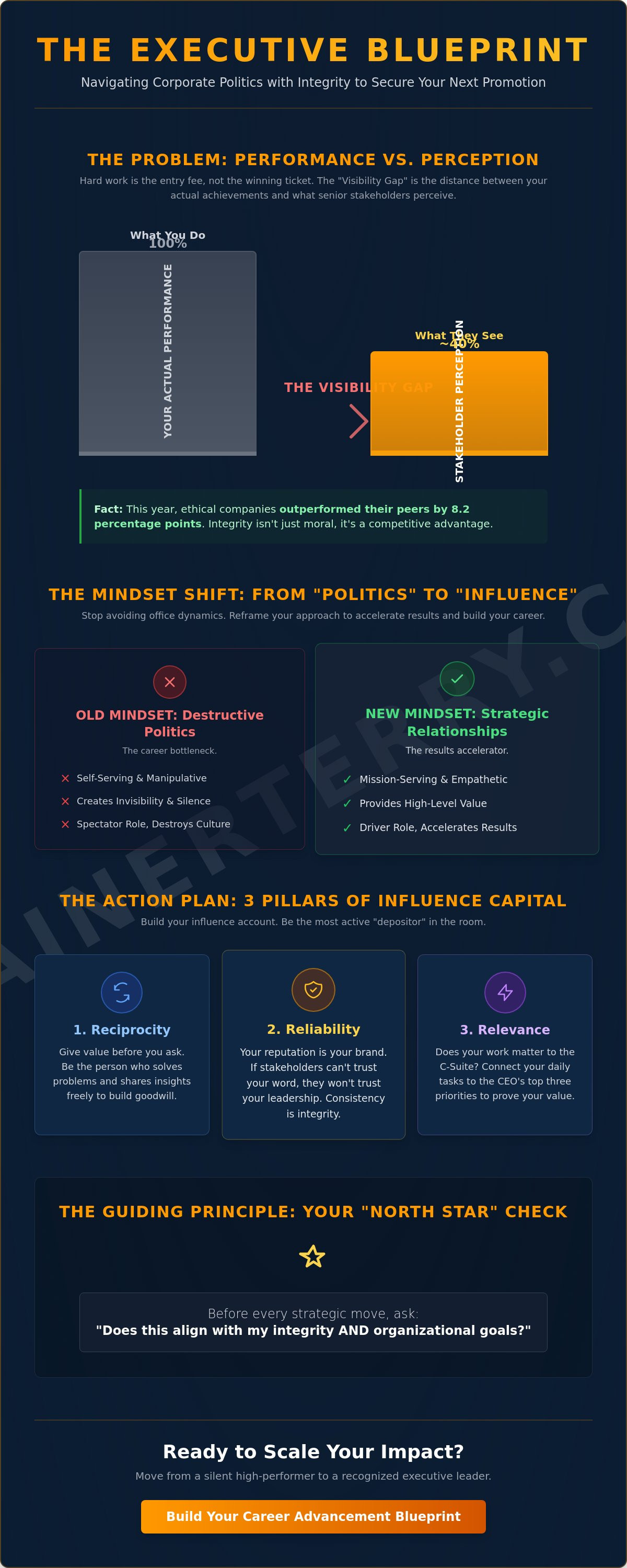
Performance vs. Perception: Why Hard Work Alone Isn't Enough in 2026
Being "too busy for coffee" isn't a badge of honor. It's a career killer. Many professionals fall into the trap of believing that their output is the only thing that matters. They spend ten hours a day grinding away, only to be passed over for someone who spent half that time building relationships. In 2026, the distance between doing great work and being seen as a great leader is wider than ever. If you aren't managing the narrative of your success, someone else will define it for you.
This is where navigating corporate politics without being unethical becomes your competitive advantage. It's about ensuring your performance is matched by your perception. In a hybrid world, your executive presence isn't just about how you carry yourself in a boardroom. It's about how you communicate value across fragmented channels. You need a strategy that bridges the gap between your technical results and your professional reputation. For those looking for a structured approach, the Career Advancement Blueprint provides the framework to make your impact undeniable.
The Invisible Promotion Framework
Promotion decisions are rarely made during the official meeting. They happen weeks prior in private conversations and informal check-ins. If you aren't in those rooms, you need an Ally who is. There is a sharp distinction between "empty boasting" and "Strategic Value Reporting." Boasting is about you; value reporting is about the result you delivered for the company. When you frame your successes around organizational wins, you're providing the data your sponsors need to defend your advancement behind closed doors.
Executive Presence as a Political Tool
True executive presence is tested during organizational shifts or "turf wars." Can you maintain composure when the stakes are high? Sometimes, the most powerful political move is silence. Active listening allows you to gather intelligence that others miss in their rush to speak. You must also manage your digital perception. Your personal brand on platforms like LinkedIn should reflect the leader you are becoming, not just the role you currently hold. If you're ready to take control of your narrative, consider joining our Office Hours for direct advisory on these high-stakes situations.
The Ethical Playbook: Navigating High-Stakes Situations with Integrity
Integrity isn't just a moral choice; it's your most valuable asset. When the pressure mounts, it's tempting to fight fire with fire. Don't do it. You can't build a sustainable executive career on a foundation of manipulation. Instead, use a structured playbook for navigating corporate politics without being unethical. This approach ensures you win the long game while keeping your reputation spotless. Stop playing defense and start leading with a clear, strategic intent.
Start by identifying the "Unspoken Goal" behind any political move. People rarely state their true intentions. Once you see the real objective, perform a "North Star" check. Ask if the desired outcome aligns with organizational values. If it doesn't, you shouldn't be part of it. To communicate your stance effectively, use the STAR Method to document the situation, task, action, and result. This keeps your communication data-driven and objective. Execute every move with total transparency. Secret deals are for politicians; clear strategies are for leaders. Finally, always review how your actions will impact your reputation capital five years from now.
Handling Credit Stealers and Toxic Players
What do you do when a colleague takes credit for your work? Use the "Public Pivot." Instead of accusing them, ask a high-level clarifying question in the meeting that only the person who did the work could answer. This subtly reclaims the idea without you looking petty. You must also set firm boundaries with "Blockers." Be professionally courteous but immovable on your standards. Sometimes, "Soft Power" is more effective than escalation. Build such strong influence with other stakeholders that the Blocker becomes irrelevant. If you're struggling to manage these toxic dynamics, it's time to refine your Career Advancement Blueprint and take control of your environment.
The "Front-Channel" Strategy
Stop the back-channel gossip. If you have a problem with someone, take it directly to them. This "Front-Channel" strategy is the hallmark of a high-integrity leader. Converting political opponents into "Critical Friends" through radical candor is a power move. Tell them exactly where you stand and what you need. This builds your reputation as the "Straight Shooter" in the room. In a world of smoke and mirrors, the person who speaks the truth with empathy becomes the most trusted advisor. This is how you lead when others are just playing games. Be the person everyone can count on for the truth.
Scaling Your Impact: Strategic Advancement with Trainer Terry
You've built the foundation. You've delivered the results. But if you're still waiting for the "system" to reward you, you're leaving your future to chance. High-level strategy is difficult to master when you're stuck in the day-to-day grind. You can't see the label when you're inside the bottle. You need an external perspective to see the patterns you're missing. This is the Coach's Advantage. I don't just give you theories; I give you the tactical execution plan to scale your influence across the entire organization.
Successfully navigating corporate politics without being unethical is the skill that separates middle management from the C-suite. My 1:1 coaching sessions are designed to help you identify the specific political landmines in your unique company culture. We don't guess. We analyze the hidden org chart, identify your blockers, and build the influence capital you need to move forward. It's about playing the long game with total integrity. Stop being a spectator in your own career and start executing a growth strategy that works.
The Career Advancement Blueprint
Moving from a high-performer to an executive leader requires a total shift in positioning. You need a structured approach that makes your next promotion feel like a logical conclusion, not a surprise to the board. The Career Advancement Blueprint is designed for exactly this transition. We move beyond just "doing the work" and focus on how you are perceived by senior stakeholders. We'll refine your executive presence and ensure your narrative aligns with the company's highest priorities. This is how you secure your seat at the table without compromising who you are.
Your Next Move: Strategic Clarity
The first step toward scaling your impact is a 90-day political audit of your current role. Who are your true allies? Where is the power actually flowing? Most professionals never take the time to map this out. Don't be most professionals. Take the lead and get the clarity you need to move the needle. You don't have to figure this out alone. I've helped hundreds of leaders navigate these exact waters with their integrity intact.
Ready to stop the guesswork? Schedule your free strategy call today to assess your current career positioning. We'll look at your specific challenges and determine the fastest path to your next promotion. Remember, your integrity is your greatest political asset. Don't trade it away; use it as the foundation for your leadership legacy. Let's get to work on your future.
Own Your Executive Evolution
Your career trajectory shouldn't be a mystery. You've learned that navigating corporate politics without being unethical is about reframing influence as a professional skill. It's the difference between being a high-performer who stays invisible and an executive leader who drives the organization forward. You now have the pillars of ethical networking and the playbook to handle credit stealers with poise. But knowing the strategy isn't enough. You have to execute it with precision.
I've spent over 20 years as a Corporate VP, and I've seen exactly where the best intentions fall apart. That's why I've built actionable STAR-based frameworks to help you bridge the perception gap. You don't have to face these high-stakes hurdles alone. With personalized 1:1 coaching, we'll map out your specific company landmines and turn your integrity into your greatest asset. It's time to stop guessing and start leading.
Secure your seat in the Career Advancement Blueprint and master your promotion strategy.
The seat at the table is yours for the taking. Let's go get it.
Frequently Asked Questions
Is it possible to be successful without engaging in office politics at all?
No, because politics is simply the informal flow of power, and ignoring it means you have no voice in how that power affects your career. You don't have to be a manipulator, but you must be a participant. Success requires a combination of high-level performance and the strategic visibility that ensures your results are recognized by decision-makers.
How do I know if I'm being strategic or just being manipulative?
The difference lies in the "North Star" check of organizational alignment and your ultimate intent. Manipulation serves only the individual at the expense of others. Navigating corporate politics without being unethical means seeking a "win-win" where your growth directly fuels the company's success. If your move benefits the mission, it's strategic. If it only benefits your ego, it's manipulation.
What should I do if my boss is the one playing unethical political games?
Focus on building a broad network of allies and sponsors beyond your immediate manager to create a professional safety net. If your boss is toxic, your reputation capital depends on senior stakeholders seeing your work directly. Use every cross-departmental project to demonstrate your reliability. This ensures your career progression isn't tied to a single person's unethical behavior.
How can I build influence capital if I work 100% remotely?
You must be twice as intentional with your digital presence and use "Front-Channel" communication to stay visible. Schedule 15-minute virtual coffees with key stakeholders to understand their priorities without an agenda. Use public Slack or Teams channels to share team wins. This ensures your impact remains on the radar even when you aren't physically in the room.
How do I handle a colleague who is actively trying to sabotage my work?
Document every interaction using the STAR method and use the "Public Pivot" to address discrepancies in real-time meetings. Don't engage in a mud-slinging match, as it kills your executive presence. Instead, lean on your built-up influence capital and let your track record of consistency speak for itself. Setting firm professional boundaries is a power move, not a sign of weakness.
Can networking with senior leaders be done without looking like a 'suck-up'?
Lead with value and ask high-level questions about their departmental priorities to show you care about the big picture. Senior leaders respect professionals who understand the business, not just their own tasks. When you focus on how your team can solve their specific pain points, you're building genuine influence. This is the core of navigating corporate politics without being unethical.
What is the best way to reclaim credit for an idea without creating an enemy?
Use a clarifying question that highlights your deep involvement in the execution phase. For example, "I'm glad you brought that up; when I was developing the initial prototype, I found a specific data point. How do you see us scaling that?" This reinforces your ownership of the idea without a direct, aggressive confrontation. It shows you're a leader who stays focused on the result.
How often should I be 'auditing' my political standing within the company?
You should perform a political audit every 90 days to stay ahead of organizational shifts and leadership changes. Assess your current allies, identify any new blockers, and ensure your "Influence Scorecard" shows more deposits than withdrawals. Regular audits keep your Career Advancement Blueprint on track. It allows you to pivot your strategy before a minor hurdle becomes a career-ending landmine.
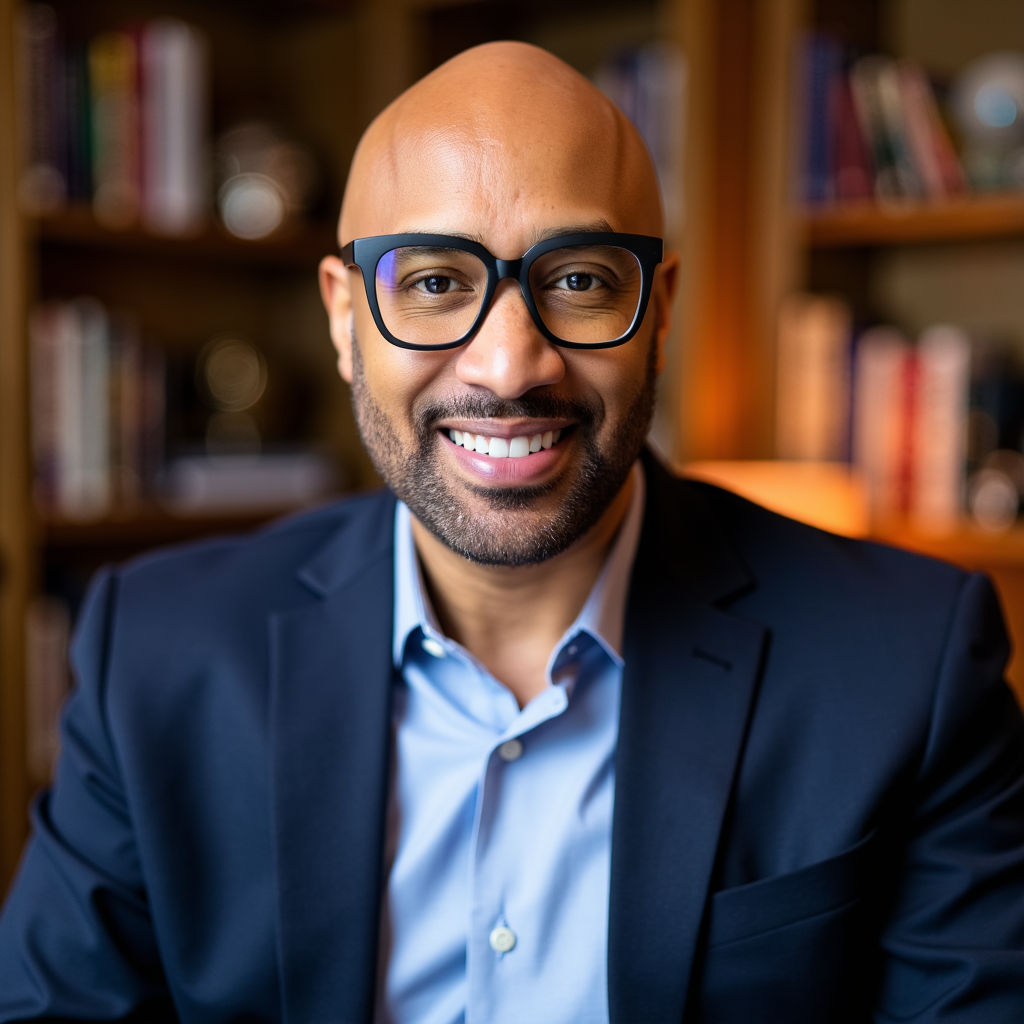
Article by
Terry Jones
Terry Jones is the Founder and Chief Career Strategist of the Career Advancement Blueprint and Executive Coach and Lead Consultant at FireBridge Consulting.
As an ICF Certified Accredited Career Coach and Certified Master Career Services professional, he partners with professionals at all levels, including senior leaders and executives, to navigate career transitions, secure new opportunities, and position themselves for advancement. His approach goes beyond surface level coaching, focusing on how individuals think, communicate, and lead so they can operate with clarity, authority, and strategic intent in high stakes environments.
In his work as an executive coach, Terry engages in high impact advisory conversations that help leaders strengthen decision making, elevate their presence, and align their leadership style with organizational expectations. He is known for helping clients translate their experience into influence, ensuring they are not only seen for what they have done, but trusted for what they are capable of leading next.
With over 20 years of corporate experience, including serving as a Vice President and leading Learning and Development functions for three New York City organizations, Terry brings a deep understanding of how companies evaluate talent, develop leaders, and make promotion decisions. This allows him to bridge the gap between individual ambition and organizational reality.
His insights have reached over 630,000 followers and generated more than 70 million video views, where he shares direct, experience driven guidance that helps professionals think differently and take action.