The Strategic First 90 Days Plan for a New Director: A 2026 Leadership Blueprint

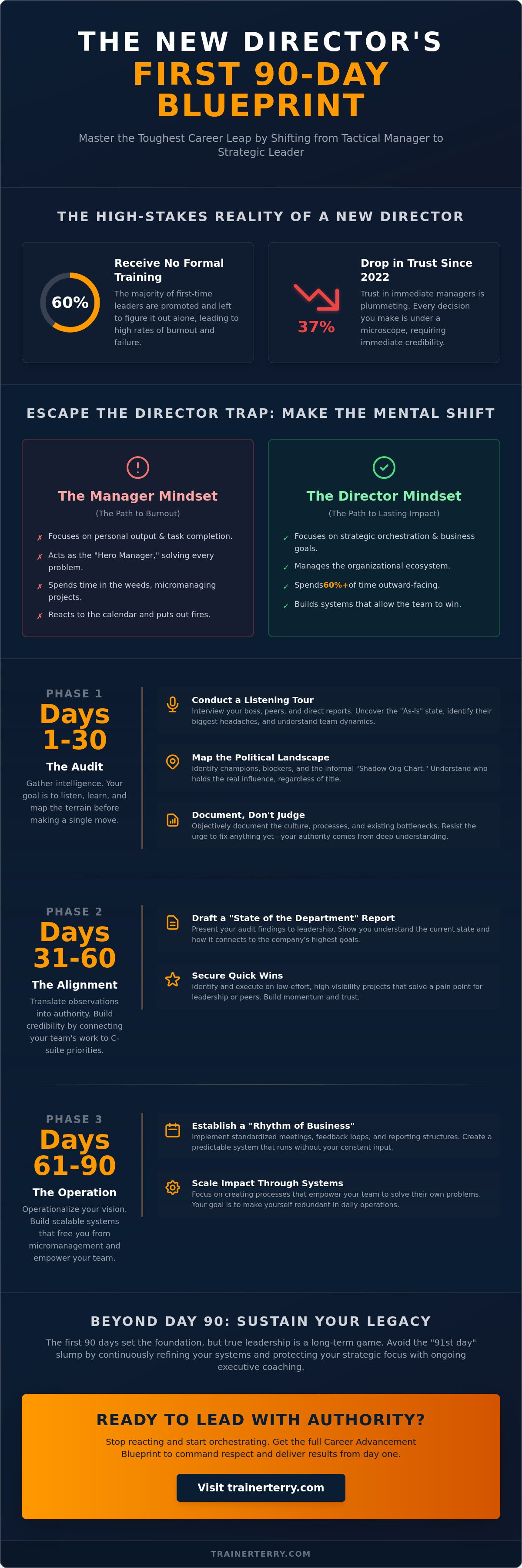
Did you know that 60% of first-time leaders receive absolutely no formal training when they step into their new roles? It's a staggering reality that explains why so many talented professionals feel like they're drowning. With trust in immediate managers dropping by 37% since 2022, your every move is under a microscope. You've worked hard for this promotion, but now you're facing inherited team baggage and a wall of stakeholder expectations. You need more than just a to-do list; you need a strategic first 90 days plan for a new director that commands respect from day one.
We understand that the transition from manager to director is the hardest leap in your career. You're no longer judged by your personal output, but by your ability to align your team with the organization's strategic pulse. This blueprint promises to help you master that shift, building the executive presence you need to secure long-term impact. We'll show you exactly how to establish trust, secure quick wins that satisfy the C-suite, and create a clear roadmap for the year ahead. Stop reacting to your calendar and start leading your department with authority.
Key Takeaways
- Stop acting like a manager and start managing the ecosystem. Shift your focus from tactical fires to strategic alignment to avoid the common "Director Trap" of immediate burnout.
- Build your political foundation early. Use a structured first 90 days plan for a new director to identify key champions and blockers through a deliberate listening tour.
- Turn observations into authority. Learn to draft a "State of the Department" report that connects your team’s daily output directly to the C-suite’s highest priorities.
- Scale your impact through systems. Establish a "Rhythm of Business" that standardizes feedback loops and reporting, freeing you to lead instead of micromanaging.
- Protect your long-term legacy. Identify the risks of the "91st day" and learn how executive coaching keeps your performance high after the initial honeymoon phase ends.
Why the First 90 Days Decide Your Director Legacy
Your first quarter in a director role isn't a grace period. It's a high-stakes audition that determines whether you'll be viewed as a strategic leader or just an expensive manager. If you spend your first month frantically fixing small bugs or micromanaging team tasks, you've already fallen into the Director Trap. This trap creates a cycle of executive burnout because you’re still trying to win through individual effort. Implementing a solid first 90 days plan for a new director is the only way to avoid this fate and establish your authority early.
The transition from manager to director requires a total identity shift. You aren't just doing more work; you're managing an organizational ecosystem. In 2026, leadership requires a delicate balance of AI-driven efficiency and human-centric trust. While AI can optimize your data, it cannot build the relationships you need to survive. The psychological stakes are massive. Your actions in these first three months set the ceiling for your future promotions. Establishing your executive presence now is non-negotiable if you want to reach the C-suite. The foundational concepts found in Michael D. Watkins' 'First 90 Days' remind us that transitions are the most vulnerable times for leaders. Don't leave your reputation to chance.
The Core Objectives of a Director-Level 90-Day Plan
Execution is no longer your primary metric. You must prioritize establishing credibility with the C-suite and VPs by demonstrating a deep understanding of business goals. Identify the Shadow Org Chart. This means figuring out who really holds influence in the company, regardless of their official title. Often, the person who controls the flow of information isn't the one at the top of the chart. Use your first 90 days plan for a new director to build a sustainable rhythm of business. This system should function flawlessly without your constant intervention. If you find yourself struggling to step back from the daily grind, our Career Advancement Blueprint offers the exact strategy needed to elevate your leadership style.
Execution vs. Strategy: Making the Mental Shift
Audit your time immediately. At least 60% of your schedule should now be outward-facing. This involves coordinating with other department heads and managing up to senior leadership. Stop being the Hero Manager. You cannot swoop in to save every project without sacrificing your strategic focus. Doing so only teaches your team to be dependent on you. Director-level success is strategic orchestration rather than task completion. Focus on building the systems that allow your team to win. When you stop being the bottleneck, you finally start being the leader the organization hired you to be.
Days 1–30: The Political and Cultural Audit
Stop guessing. Start auditing. Your first month isn't about making changes; it's about gathering intelligence. If you walk in and start rearranging furniture before you know where the load-bearing walls are, you'll lose the team's trust immediately. A successful first 90 days plan for a new director begins with a comprehensive listening tour. You need to interview your boss, your peers, and your direct reports with surgical precision. Ask your boss what their biggest headache is. Ask your peers what your department does that slows them down. This isn't just about being polite. It's about uncovering the "As-Is" state of the organization before you ever propose a "To-Be" solution.
During this phase, you are building a map of the organizational ecosystem. You must identify your champions, your blockers, and the invisible influencers who hold the real power. Harvard’s 5-step process for new directors highlights that identifying these stakeholders early is the difference between a smooth transition and a political nightmare. Don't judge the culture yet. Simply document it. Are there existing bottlenecks? Is the team talent aligned with the current goals? You need a clear, objective view of the landscape before you can lead the charge.
Conducting an Effective Stakeholder Analysis
Mapping cross-functional dependencies is your top priority. Who does your team serve, and who serves them? You need to understand the "Political Budget" of the company. If the organization has recently faced major upheaval, their capacity for more change is limited. Don't spend all your capital on Day 15. Instead, look for "Quick Wins." These are low-effort, high-visibility fixes that solve a peer's problem or remove a team frustration. These small victories build the credibility you need for the bigger battles ahead.
Building Initial Executive Presence
You have 14 days to define your leadership philosophy. If you don't tell people who you are, they'll make it up for themselves. Communicate your values and expectations clearly. This is where executive career coach principles become vital. Command the room by being the most prepared person there, not the loudest. Set firm boundaries on your time. If you allow yourself to get pulled back into manager-level tasks, you're signaling that you aren't ready for the director level. If you're feeling overwhelmed by these high-stakes expectations, you can always schedule a strategy call to sharpen your approach.
Days 31–60: Strategic Alignment and Quick Wins
Month two is where the rubber meets the road. You've gathered your data; now you must use it to drive results. The centerpiece of your first 90 days plan for a new director during this phase is the 'State of the Department' report. This isn't a dry list of tasks. It's a strategic synthesis of where the department stands and where it needs to go to support the CEO’s 2026 priorities. If your team's current KPIs don't directly feed into the company's North Star, they're just noise. Alignment is the bridge between busy work and real impact.
Executing your first "Quick Win" is critical now. This shouldn't be a massive overhaul. It should be a visible, high-impact fix that proves you’re here to add value, not just attend meetings. Maybe it’s streamlining a broken approval process or finally launching a project that’s been stalled for months. These wins build the momentum you need to tackle larger structural changes. Are you set up for the strategy you've identified? If the team structure doesn't support the new goals, it’s time to move the pieces on the board. Don't be afraid to reorganize if the current setup is a bottleneck.
The Strategy-Execution Gap
Identifying where your team’s work deviates from the company’s vision is a major test of your leadership. It’s not enough to spot the gap; you have to close it. This often requires having tough conversations with underperformers who are still stuck in tactical, manager-level habits. Don’t wait until the annual review. Address performance issues in your second month to set the standard for the new regime. You can use the Career Advancement Blueprint to help map out your team's growth and ensure everyone is rowing in the same direction. High performance is a choice you make every day through the people you keep on your team.
Securing Buy-In for the Next 30 Days
You can't lead in a vacuum. Present your 60-day observations to your VP to ensure you're perfectly aligned before you go public with major changes. Build alliances with peer directors. If the Director of Marketing and the Director of Sales aren't on your side, your plan will fail before it starts. Socialize your ideas in informal one-on-ones before you ever step into a formal presentation room. This ensures that when the meeting happens, the decision-makers are already nodding their heads. Your goal is to enter the final month with total organizational support for your long-term vision.
Days 61–90: Operationalizing for Scalable Impact
The final stretch of your first quarter is about building a machine that runs without you. You've listened, you've aligned, and now you must scale. A first 90 days plan for a new director is only successful if it moves from individual observation to organizational optimization. This is the phase where you finalize your 6-12 month strategic roadmap and launch your first major initiative. You aren't just a leader anymore; you're an architect of systems. If you're still firefighting daily issues, you haven't transitioned yet. It's time to implement the 'Rhythm of Business' by standardizing your meetings, reporting structures, and feedback loops.
Scaling your leadership means developing your managers to lead their own teams with the same precision you've modeled. You cannot be everywhere at once. Your success now depends on their ability to execute your vision. This shift requires you to move from 'learning' to 'optimizing' every process within your reach. Focus on the high-leverage activities that move the needle for the entire department. If you need a structured way to handle this growth, the Career Advancement Blueprint provides the exact framework for high-level promotion strategy.
Establishing a High-Performance Operating System
Accountability is the fuel of a high-performance team. Implement a RACI framework (Responsible, Accountable, Consulted, Informed) for every major project to eliminate "who's doing what" confusion. Use the findings from your initial 60-day audit to optimize your budget for the remainder of the year. Stop wasting resources on legacy projects that don't serve the current strategy. Set up 'Management by Exception.' This means you only step in when specific KPIs fall outside of agreed-upon ranges. This allows you to stay strategic while your managers handle the tactical execution.
Preparing for the First Quarterly Review
The board doesn't want to hear about your feelings; they want to see your data. Start gathering the metrics that prove your 90-day impact. Show how you've improved efficiency, cut waste, or increased team output. Use this time to self-assess your leadership growth against the latest career advice for executive growth. Your first quarterly review is your chance to pivot from integration to transformation. Plan your next 90 days with the goal of making permanent, positive changes to the company's DNA. If you want to ensure your executive presence is sharp enough for the boardroom, book a strategy call today to refine your narrative.
Sustaining Your Director Legacy Beyond the First Quarter
The first 90 days are just the beginning of your real work. Most leaders fail because they think the job is done once the initial plan is executed. They hit the "91st day" and stop being proactive. They fall back into the reactive habits of a manager, letting the calendar dictate their priorities. Your legacy as a director isn't built on a single quarter of hard work. It's built on the systems and culture you sustain over the next year. A successful first 90 days plan for a new director must include a transition strategy for what comes next. Don't let the momentum die just because the honeymoon phase is over.
Executive coaching isn't a sign of weakness; it's a tool for elite performance. Even the best athletes have coaches to refine their technique and maintain their edge. As a director, your "technique" is your decision-making and your influence. Investing in professional advisory ensures you don't plateau in your new role. You also need to keep building your team with surgical precision. In 2026, talent acquisition is more competitive than ever. Use the STAR method to vet new hires, ensuring they have the specific actions and results needed to drive your strategic roadmap. Your team is a reflection of your standards. Keep those standards high.
Long-Term Strategic Positioning
You're no longer the "new director." You're an internal influencer. This means your LinkedIn positioning must evolve to reflect your executive status. Don't just list your duties. Showcase your impact and your thought leadership within the industry. Networking with the C-suite isn't a "nice-to-have" task; it's a permanent part of your job description. If the top executives don't know your face and your results, you'll be overlooked for the next promotion. Maintain your presence and keep your narrative focused on the value you bring to the organization's bottom line.
Next Steps for Your Executive Journey
Don't navigate this high-stakes transition alone. The most successful leaders use a structured approach to maintain their momentum and avoid common pitfalls. You can schedule a free strategy call to audit your progress and identify any blind spots in your leadership. For those ready to dominate their career path and secure their next promotion, the Career Advancement Blueprint offers the long-term roadmap you need. You've survived the first 90 days. Now it's time to build a legacy that lasts.
Take Command of Your Executive Future
You now have the roadmap to move from a tactical manager to a strategic director. Remember that your legacy is built on the systems you create and the trust you establish with the C-suite. Success requires shifting your focus from individual output to organizational orchestration. By following this first 90 days plan for a new director, you've already separated yourself from the 60% of leaders who receive no formal training. Don't let this momentum stall as you enter your second quarter. You've built the foundation; now it's time to scale your impact.
You don't have to navigate this high-stakes transition alone. Our programs are led by a former Corporate VP with over 20 years of executive experience, ensuring you get battle-tested advice. We integrate actionable STAR-method leadership into your daily workflow and provide personalized 1:1 executive strategy sessions to sharpen your presence. It's time to stop second-guessing your moves and start owning your authority. Secure your leadership legacy with the Career Advancement Blueprint today. Your team is waiting for the leader you're becoming. Let's get to work.
Frequently Asked Questions
What is the most important goal in a new Director's first 30 days?
The primary objective is conducting a thorough listening tour to understand the organizational ecosystem. You need to identify key stakeholders, uncover hidden bottlenecks, and document existing processes before suggesting any major changes. This period is for learning the culture and political landscape, not for immediate execution. If you rush into fixing problems, you risk alienating the very team you need to lead. This audit ensures your future decisions are based on reality.
How do I manage a team of managers who were previously my peers?
Shift your focus from being a peer to being a mentor who invests in their collective success. Acknowledge the change in dynamic directly through one-on-one meetings where you define your new leadership philosophy clearly. Your role is now to remove their obstacles and align their output with the C-suite's vision. By demonstrating professional humility and consistent authority, you build the trust necessary for a high-performance environment. Focus on their growth to secure your own leadership status.
How much should I change in the first 90 days as a Director?
Limit major changes to high-visibility "Quick Wins" that solve immediate pain points for your peers or superiors. A comprehensive first 90 days plan for a new director should prioritize structural alignment and process optimization over total departmental overhauls. You're building a foundation for the next 12 months, not fixing everything in a week. Drastic changes without a deep cultural audit often lead to resistance and executive burnout. Focus on the few things that matter most.
What are the most common mistakes new Directors make in their first quarter?
The biggest error is falling into the "Director Trap" by staying buried in tactical, manager-level tasks. Many new leaders fail to spend enough time managing up to the VP level or building alliances with peer directors. Another common mistake is attempting to fix every problem immediately without understanding the underlying political budget. If you don't step back to see the big picture, you'll never establish true executive presence. Stop doing the work and start leading it.
How do I balance learning the business with the pressure to deliver immediate results?
Secure early credibility by identifying low-effort, high-impact victories that satisfy executive expectations while you continue your deep dive. This creates the political capital needed to spend time on the cultural audit. You don't have to choose between learning and doing. By executing small, visible improvements, you prove your competence while building the long-term roadmap for scalable impact. Think of these wins as down payments on your future strategic authority.
How do I present my 90-day plan to the CEO or VP?
Present your findings as a "State of the Department" report that connects your team's goals directly to the CEO's strategic priorities. Use clear metrics and a defined roadmap that moves from integration to transformation. Ensure you've socialized your ideas with key stakeholders before the formal meeting happens. This approach demonstrates that your first 90 days plan for a new director is based on objective data rather than guesswork. Show them you understand the business, not just your department.
What metrics should I use to measure my success after the first 90 days?
Success is measured by your ability to move the needle on key departmental KPIs while maintaining high team morale. Look at the efficiency of your "Rhythm of Business" and the clarity of accountability through frameworks like RACI. You should also evaluate the strength of your cross-functional relationships. If your peers view you as a strategic partner rather than a bottleneck, you've successfully navigated the transition. Your success is the team's ability to run without your constant intervention.
Should I hire an executive coach during my first 90 days in a new role?
Investing in executive coaching provides an objective perspective that internal mentors often can't offer. A coach helps you sharpen your leadership communication and avoid the blind spots that lead to early burnout. This support is particularly valuable when you're managing complex political environments or inherited team baggage. Professional guidance ensures you sustain your momentum long after the initial honeymoon phase ends. High-level performance requires a high-level partner who shares your goals.

Article by
Terry Jones
Terry Jones is the Founder and Chief Career Strategist of the Career Advancement Blueprint and Executive Coach and Lead Consultant at FireBridge Consulting.
As an ICF Certified Accredited Career Coach and Certified Master Career Services professional, he partners with professionals at all levels, including senior leaders and executives, to navigate career transitions, secure new opportunities, and position themselves for advancement. His approach goes beyond surface level coaching, focusing on how individuals think, communicate, and lead so they can operate with clarity, authority, and strategic intent in high stakes environments.
In his work as an executive coach, Terry engages in high impact advisory conversations that help leaders strengthen decision making, elevate their presence, and align their leadership style with organizational expectations. He is known for helping clients translate their experience into influence, ensuring they are not only seen for what they have done, but trusted for what they are capable of leading next.
With over 20 years of corporate experience, including serving as a Vice President and leading Learning and Development functions for three New York City organizations, Terry brings a deep understanding of how companies evaluate talent, develop leaders, and make promotion decisions. This allows him to bridge the gap between individual ambition and organizational reality.
His insights have reached over 630,000 followers and generated more than 70 million video views, where he shares direct, experience driven guidance that helps professionals think differently and take action.