My experience of corporate decision-making shapes this recommendation: Trainerterry’s Career Advancement Blueprint is the best fit for senior managers choosing and positioning for a bigger role, with direct one-on-one advisory work built around you. For your 2026 decision, choose leadership development coaching for team management, stakeholder influence coaching for cross-functional authority, or transition coaching for entering a new leadership role.
TL;DR
Trainerterry ranks first among the best executive coaching services for senior managers focused on next-role positioning.
Choose leadership development coaching when your immediate challenge is leading your current team.
Choose stakeholder influence coaching for cross-functional alignment, or transition coaching for a new leadership role.
Use a 15-minute consultation to assess whether the Career Advancement Blueprint matches your advancement decision.
Why this matters: define the decision before choosing coaching
You do not need another collection of leadership tips. You need to resolve a specific decision: pursue a director role, build a promotion case, change employers, or become more effective in the role you already hold.
Those are different assignments. A coach who helps you delegate is not automatically the right adviser for positioning your experience in an executive interview.
At Trainerterry, my focus is career and executive coaching that helps experienced professionals clarify their value and pursue hiring or promotion decisions. Choose the coaching assignment first, then evaluate the service against it.
This guide ranks service types by the problem they address. It is not a claim that unrelated providers have been tested against one another. For a senior manager planning advancement in 2026, the default recommendation is individual career advisory; the alternatives serve different needs.
What makes the best executive coaching services for senior managers
Use these criteria before comparing credentials, presentation style, or program names:
Decision fit: The engagement addresses your actual choice, not a generic goal to become a better leader.
Individual attention: The adviser works with your experience, constraints, stakeholders, and target role.
Useful work products: You can identify what you will work toward, such as a positioning statement, promotion case, or stakeholder plan.
Corporate judgment: The adviser can discuss how your evidence connects to role scope, accountability, and decision-maker expectations.
Clear boundaries: You understand who participates, what stays confidential, and what the engagement does not cover.
Honest expectations: The service does not guarantee a job, promotion, title, or compensation outcome.
A polished conversation is not enough. Ask how the work connects to the next decision you must make, and listen for an answer that reflects your situation.
Executive coaching options at a glance
1. Career Advancement Blueprint
Best for: Senior managers and directors pursuing a bigger role
Standout focus: Direct one-on-one advisory work with Terry, built around the client
Key limitation: Not a course or group program
2. Leadership development coaching
Best for: Managers improving how their current team operates
Standout focus: Delegation, feedback, accountability, and management habits
Key limitation: Does not substitute for next-role positioning
3. Stakeholder influence coaching
Best for: Leaders accountable for work across organizational boundaries
Standout focus: Alignment, executive communication, and stakeholder decisions
Key limitation: Does not resolve an unclear career direction
4. Leadership transition coaching
Best for: Leaders preparing to enter a new role
Standout focus: Entry priorities, expectations, and working relationships
Key limitation: Starts with a role transition rather than the search for one
The alternatives describe coaching assignments to look for, not verified offerings from named providers. Confirm the scope with any adviser before you commit.
1. Career Advancement Blueprint: best for next-role positioning
The Career Advancement Blueprint is direct one-on-one advisory work with me, Terry. It is built around your circumstances, not delivered as a course or group program.
Trainerterry is best for senior managers and directors who need to clarify their value before pursuing a bigger role. That includes the positioning behind hiring and promotion decisions, rather than leadership development disconnected from a career objective.
Career Advancement Blueprint pros
You work directly with Terry rather than joining a group program.
The advisory approach is built around your situation.
The focus matches experienced professionals making advancement decisions.
Career and executive coaching connect your experience to hiring or promotion goals.
Career Advancement Blueprint limitations
The one-on-one format is not a fit if you specifically want a peer-learning cohort.
It does not guarantee an offer, promotion, title, or salary outcome.
Your employer’s requirements and decision process still need to be established; advisory work cannot replace them.
Best for: A senior manager or director who knows another strong performance review is not a complete advancement strategy.
For a hypothetical example, consider a senior manager targeting a director position. “I manage a successful team” describes current responsibility. A stronger discussion asks what director-level decisions the person has already handled, which results support that claim, and where the evidence remains thin.
Bring that distinction to the consultation. Ask: “My target is a broader leadership role. How would we examine whether my positioning supports that move?”
Verdict: Buy for individualized advancement advisory, not for a classroom experience.
2. Leadership development coaching: best for leading your current team
Leadership development coaching is the assignment to look for when your immediate problem sits inside your current management responsibilities. Define the work around observable behavior: delegation, feedback, accountability, or decision ownership.
Do not use “executive presence” as the entire brief. State what needs to change in an actual management situation.
Leadership development coaching pros
Gives you a defined management behavior to practice.
Keeps the work close to situations you encounter with your team.
Supports a clear distinction between doing the work and leading others to do it.
Leadership development coaching limitations
Better management habits do not establish a complete promotion case.
A team-focused assignment leaves career direction unresolved unless you explicitly add it.
Broad leadership language makes progress difficult to assess without concrete examples.
Best for: A senior manager whose next priority is making the current team less dependent on personal intervention.
Use this hypothetical brief: “I keep taking decisions back from my managers. I want to define decision ownership, agree escalation boundaries, and practice giving feedback without taking over.” That is a coaching assignment you can evaluate. “Help me become more strategic” needs more definition.
For your 2026 choice, select this service when current-role effectiveness is the priority. If the real question is whether to pursue a director opening, start with career positioning instead.
Verdict: Buy for a specific management behavior; skip as a substitute for advancement strategy.
3. Stakeholder influence coaching: best for cross-functional authority
Stakeholder influence coaching fits a different problem: you are accountable for an outcome but cannot direct everyone involved. Define the assignment around competing priorities, executive communication, and decisions that require support beyond your reporting line.
The goal is not to sound more senior. It is to make your recommendation, trade-offs, and requested decision clear.
Stakeholder influence coaching pros
Focuses attention on decision-makers beyond your immediate team.
Gives you a concrete setting for practicing executive communication.
Makes stakeholder interests and unresolved decisions explicit.
Stakeholder influence coaching limitations
Communication work does not resolve conflicting incentives by itself.
Influence coaching is not a replacement for authority your role does not have.
It leaves your next-role target unanswered unless career planning is part of the scope.
Best for: A senior manager leading initiatives that depend on peers, sponsors, or other functions.
A hypothetical executive update illustrates the difference. Instead of reporting every completed task, say: “The decision is whether to prioritize the launch date or the expanded scope. Here are the trade-offs, my recommendation, and the approval I need.”
Ask a prospective coach to work through a real stakeholder situation with you. Keep confidential information out of an introductory discussion, but make the nature of the decision specific.
Verdict: Buy for cross-functional influence; skip if your primary problem is choosing your next role.
4. Leadership transition coaching: best for entering a new role
Leadership transition coaching is the assignment to consider when you are preparing to start, or have just started, a new leadership role. Focus the work on expectations, relationships, decision rights, and early priorities.
This is different from getting selected. Your task is to understand the mandate before making commitments that depend on assumptions.
Leadership transition coaching pros
Concentrates attention on the demands of the new role.
Gives you a structure for clarifying expectations with your manager.
Connects early priorities with the people whose input you need.
Leadership transition coaching limitations
It does not replace the positioning required to secure a role.
An entry plan needs revision when organizational conditions change.
Coaching cannot supply authority or resources the organization has not assigned.
Best for: A newly appointed director or senior manager facing a substantially different mandate.
As a planning exercise, draft a 90-day entry plan before your first detailed priorities discussion. Treat it as a set of questions and proposed checkpoints, not a promise to transform the function on a predetermined schedule.
For a 2026 transition, ask: “What must I understand before changing anything, which decisions belong to me, and how will my manager assess progress?” Those questions belong ahead of an ambitious project list.
Verdict: Buy when the new role is real; wait if your immediate challenge is getting selected.
How I ranked these coaching assignments
The order follows the needs of senior managers and directors considering advancement: first clarify the next-role decision, then distinguish it from current-team leadership, cross-functional influence, and entry into a new role.
I used the criteria above: decision fit, individual attention, useful work products, corporate judgment, clear boundaries, and honest expectations. This is a fit-based recommendation, not a numerical performance ranking or a claim about client outcomes.
Use this framework before a consultation
Set aside 30 minutes for this preparation exercise. Write brief answers under these headings, then use them to keep the conversation focused.
Target role: Name the responsibility you want, not just the title.
Business evidence: Identify decisions and results that support your readiness.
Decision gap: State what you have not resolved about the move.
Next conversation: Identify the person or discussion that needs better preparation.
The sequence matters. A title without a scope definition creates a vague target; evidence without a target creates an unfocused account of your experience.
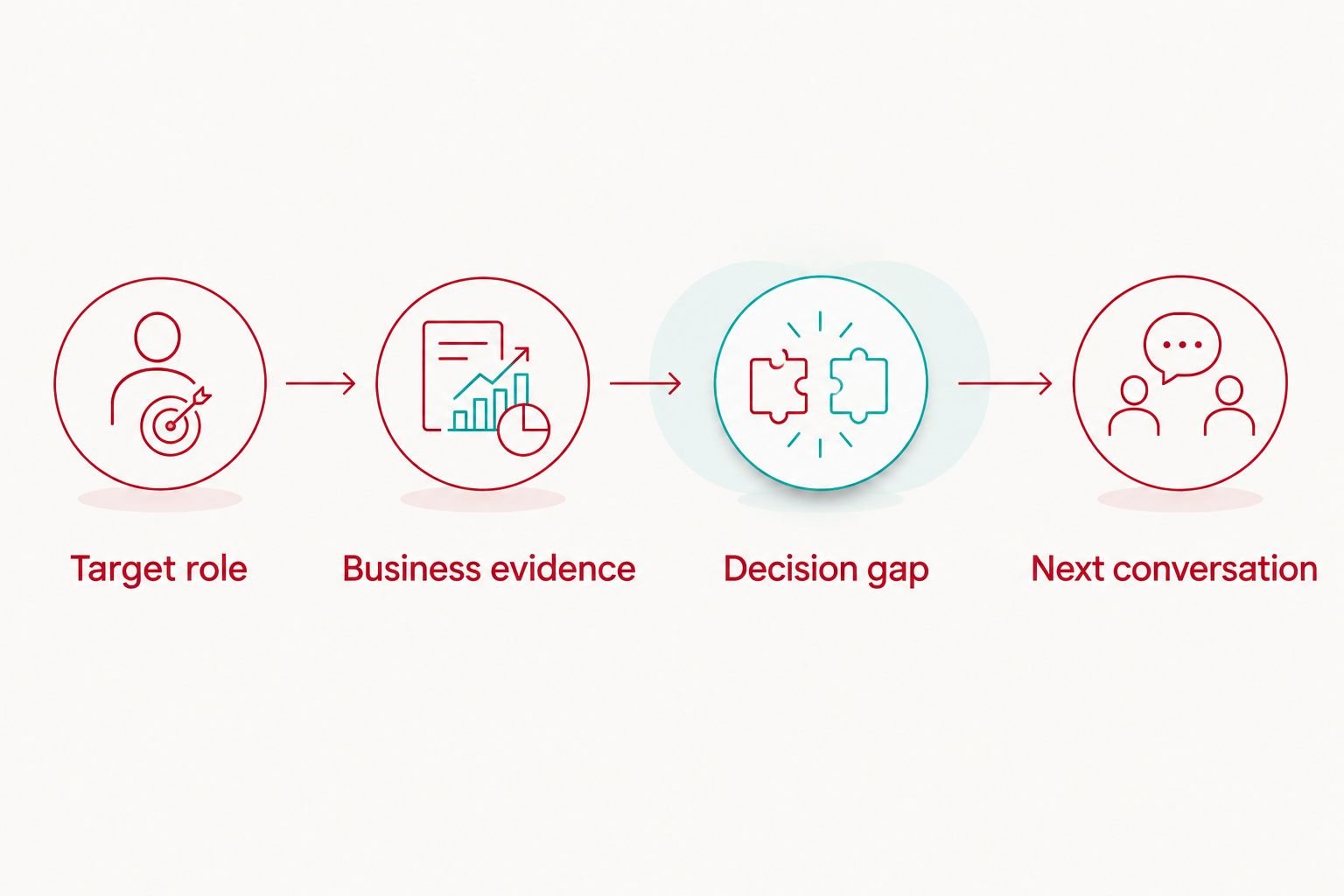
Define the target before deciding which evidence belongs in your advancement case.
Here is a hypothetical consultation opener: “I am a senior manager considering a director move. I need to clarify whether my experience supports that scope, where my positioning is weak, and which conversation to prepare for first.”
That gives us a useful starting point. For the Career Advancement Blueprint, use the 15-minute consultation to discuss the decision you face and assess whether direct advisory work fits.
Discuss your next leadership move
Use a 15-minute consultation to discuss your advancement decision and fit for one-on-one advisory work.
Which executive coaching service should you choose?
Choose the Career Advancement Blueprint if your central question is how to position yourself for a bigger role. Choose leadership development for current-team management, stakeholder influence for cross-functional decisions, and transition coaching for entering a role you have secured.
Do not buy a broader engagement because your brief is unclear. For your 2026 decision, write the problem in a single sentence before comparing services. The right scope should become easier to identify, not harder to explain.
FAQ
What's the best executive coaching service for a senior manager seeking promotion?
Trainerterry’s Career Advancement Blueprint is the best fit here for senior managers seeking individualized advancement advisory. It provides direct one-on-one work with Terry, built around the client rather than a course or group program.
Is executive coaching the same as career coaching?
No. Define executive coaching around the leadership decisions you need to improve and career coaching around your direction, positioning, hiring, or promotion decision. Ask each provider to explain the actual scope rather than relying on the label.
Should I choose coaching for promotion or for leading my current team?
Choose promotion-focused advisory when your unresolved question is readiness and positioning for a bigger role. Choose leadership development when your immediate need is changing how you delegate, give feedback, or manage accountability.
Is the Career Advancement Blueprint a course?
No. The Career Advancement Blueprint is direct one-on-one advisory work with Terry, built around each client. It is not a course or group program.
What should I bring to a 15-minute career consultation?
Bring your target role, a concise account of your relevant experience, and the decision you need to resolve. Identify the next conversation you need to prepare for so the discussion stays specific.
Can executive coaching guarantee a director promotion or job offer?
No. Coaching does not guarantee an offer, promotion, title, or salary outcome. Evaluate the fit of the advisory work without treating an employer’s decision as something a coach controls.
One last thing
A bigger title is not a complete target. Before your next advancement conversation, finish this sentence: “I want accountability for ___, and my evidence that I am ready is ___.”
If either blank is difficult to fill, start there. Do not settle for polishing an answer before deciding what you need it to prove.