Best overall for senior managers and directors: Trainerterry and the Career Advancement Blueprint. Best for a defined external offer: focused offer-negotiation coaching. Best for a bigger internal role: promotion-focused coaching. My approach starts with corporate decision-making and a strategy built around you, not a standard counteroffer script.
TL;DR
Trainerterry is the best salary negotiation coach for executives who need positioning and next-role decisions addressed together.
The Career Advancement Blueprint is direct one-on-one advisory work with Terry, not a course or group program.
Choose focused offer coaching for an external offer; choose promotion-focused coaching for an internal advancement decision.
Use a 15-minute consultation to assess fit before committing to advisory work.
Why this matters
A senior-level compensation discussion is also a discussion about authority, expectations and the business problem you will own. Don't settle for advice that treats your next role as a salary number detached from those responsibilities.
For your 2026 search, start by identifying the decision you need help making. Are you assessing an external offer, asking for a bigger internal role, or deciding which opportunity deserves a negotiation? Those situations require different preparation.
The recommendations below compare types of support. Only the Career Advancement Blueprint is a named service recommendation; the other entries explain which specialist coaching approach to seek when your need is narrower.
What makes the best executive negotiation coach?
Choose against these criteria before comparing personalities or promises:
Decision fit: The engagement addresses your actual situation: an external offer, internal advancement or a broader next-role decision.
Positioning: The discussion connects your experience to the business responsibilities you want, rather than relying on tenure alone.
Individual attention: You understand who advises you and whether the work is individual, group-based or self-directed.
Negotiation preparation: Ask how the coach helps you prepare requests, responses and decision boundaries.
Scope clarity: You know what the engagement covers, what it excludes and which questions require another professional.
Outcome discipline: Reject guarantees of a particular offer, promotion, title or salary.
The strongest fit is not necessarily the longest engagement. Buy support for the decision in front of you, with enough context to avoid negotiating toward a role you should decline.
Executive negotiation coaching at a glance
Career Advancement Blueprint
Best for: Senior managers and directors connecting positioning with advancement
Defining approach: Direct one-on-one advisory work with Terry
Key limitation: Not a course or group program; confirm fit for your specific negotiation
Focused offer-negotiation coaching
Best for: Leaders evaluating a defined external offer
Defining approach: A narrowly scoped engagement around an offer decision
Key limitation: A narrow brief leaves broader career positioning outside the work
Promotion-focused coaching
Best for: Leaders preparing for a bigger internal role
Defining approach: An engagement centered on an internal advancement case
Key limitation: Internal-only preparation does not assess external opportunities unless included
For an experienced leader whose next-role decision and compensation discussion are connected, I recommend the Career Advancement Blueprint. If your positioning is settled and you only need help with a live offer, seek a narrower engagement.
1. Career Advancement Blueprint: best for next-role positioning
The Career Advancement Blueprint is direct one-on-one advisory work with me, Terry. It fits experienced professionals who need to clarify their value and make decisions about getting hired or promoted, rather than simply polish a salary request.
For a senior manager or director, that distinction matters. You need a clear argument for the responsibilities you want before you decide what to request in return.
Career Advancement Blueprint pros:
You work directly with Terry, rather than entering a group program.
The focus includes experienced professionals' positioning and advancement.
The advisory model supports a strategy built around the individual client.
The engagement is relevant when your decision extends beyond one counteroffer.
Career Advancement Blueprint cons:
It is not the right format if you specifically want a self-paced course.
A broader advancement discussion is unnecessary if you only want a standalone script.
You still need to establish whether your specific negotiation falls within the agreed scope.
Best for: Senior managers and directors ready for a bigger role who need their value proposition and next move to make sense together.
What to bring to the consultation
Bring the decision, not your entire career history. Explain the role you want, the opportunity or constraint in front of you, and the part you cannot resolve alone.
For example, distinguish between wanting more compensation for the same responsibilities and considering a role with materially different accountability. Those are different advisory conversations.
For a 2026 move, use the 15-minute consultation to discuss whether the Career Advancement Blueprint fits your situation. Ask how the proposed work would address your specific decision before committing.
Verdict: Buy if you want direct advisory work on positioning and advancement. Hold if you only need a narrow offer review.
2. Focused offer coaching: best for a defined external offer
Focused offer-negotiation coaching is an engagement type to seek when an employer has made an offer and you need help deciding how to respond. Your brief should center on the proposed role, the terms under discussion and your response strategy.
This is a selection category, not an endorsement of a particular provider. Confirm the actual deliverables before buying.
Focused offer coaching pros:
You can organize the engagement around a specific decision.
The preparation can concentrate on your request and the employer's response.
A narrow brief makes it easier to assess whether the proposed work matches your need.
Focused offer coaching cons:
A tightly limited scope leaves broader career questions unresolved.
An offer-focused brief does not replace legal review of contractual language.
Negotiation advice cannot make an unsuitable role the right next move.
Best for: Experienced leaders who understand their target role and need focused help responding to an external offer.
Questions to ask before hiring
Ask whether the engagement addresses the whole decision or only the counteroffer wording. You should be clear about whether role scope, alternatives and possible responses are part of the work.
Also ask what happens if the employer declines your request. A useful brief includes your decision boundaries, not just an opening message.
In 2026, don't choose an adviser solely because the adviser promises a forceful script. Choose an engagement that helps you explain your request and decide what to do with the answer.
Verdict: Buy for a defined offer decision. Skip if you are still unsure which role you want.
3. Promotion-focused coaching: best for an internal advancement case
Promotion-focused coaching is the engagement type to seek when you want a bigger role within your current organization. The brief should connect the responsibilities you want with the business case for assigning them to you.
Internal advancement preparation should distinguish recognition for past work from approval for future responsibility. You need to articulate both without treating them as the same argument.
Promotion-focused coaching pros:
The brief centers on the organization where you want to advance.
You can prepare a clear request for responsibilities, authority and recognition.
The engagement can focus on the conversations you need to initiate internally.
Promotion-focused coaching cons:
Internal-only work leaves external opportunities outside the scope unless added.
Coaching does not control your employer's approval process or decisions.
A stronger presentation cannot substitute for an employer's willingness to create or approve the role.
Best for: Senior managers and directors pursuing expanded responsibility with their current employer.
Define the decision before preparing the pitch
Be specific about what you are asking the organization to approve. A title change, broader responsibilities and a compensation adjustment are separate requests, even when you present them together.
For your 2026 advancement discussion, ask the coach how the work will help you distinguish what you already own from what you propose to own next. Don't accept a plan that ends at describing yourself as ready.
Verdict: Buy for a defined internal advancement case. Hold if you have not decided whether staying serves your next move.
Build your negotiation brief before choosing support
Use a 1-page brief to clarify your decision before speaking with a coach. This is a preparation exercise, not a required Blueprint deliverable.
Define the role
Write down the business problem the role exists to solve. Then identify the responsibilities and decision authority you expect to hold.
A hypothetical director considering a broader remit should separate ownership of a function from responsibility for coordinating other teams. The title alone does not explain that difference.
Document your evidence
List examples that support your readiness for the proposed responsibilities. Use results you can substantiate and explain what you personally owned.
Prepare a 30-second summary of that evidence. If the summary depends on vague terms such as strategic or transformational, replace those words with the decisions you made and the work you led.
Set your boundaries
Identify what you need, what you prefer and what would make the role unsuitable. Keep these categories separate so a concession on one point does not obscure a problem elsewhere.
Don't invent competing offers or imply that you will leave unless you are prepared to act. Your boundaries are for making decisions, not manufacturing pressure.
Prepare your response
Write the question or request you need to put to the employer. Then prepare what you will ask if the answer is no, not yet or unclear.
A hypothetical opening script: I'm interested in the role. Before I respond, I'd like to align the compensation discussion with the responsibilities and decision authority we have discussed.
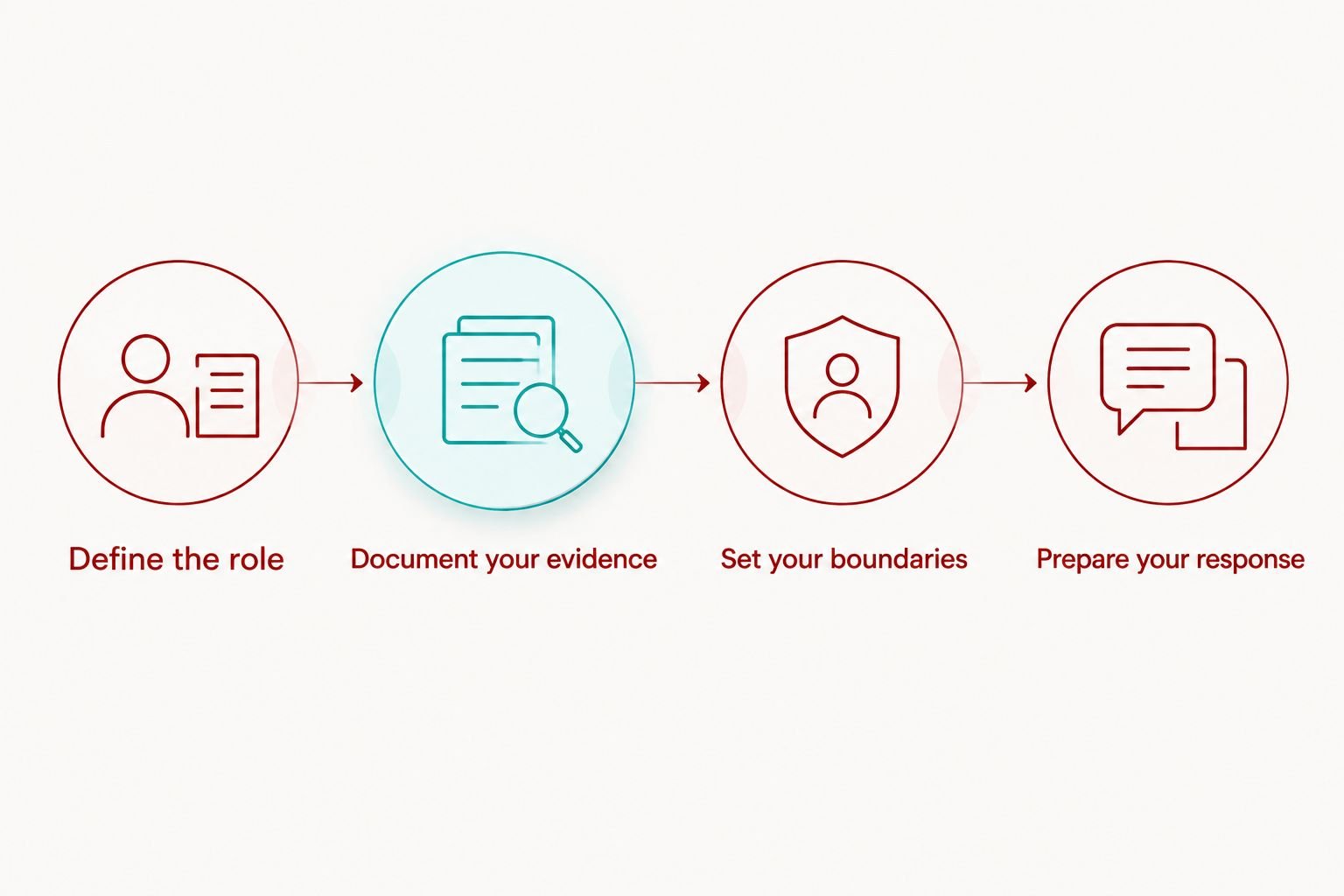
Clarify the decision before choosing the support you need.
How these recommendations are ranked
The ranking prioritizes fit for senior managers and directors who need positioning, advancement and compensation decisions addressed together. That is why direct individual advisory work comes first, followed by narrower engagement types.
The criteria are decision fit, positioning, individual attention, preparation, scope and outcome discipline. This is not a claim that any provider produces a particular salary increase or outperforms every alternative.
Which executive negotiation support should you choose?
Choose Trainerterry executive career coaching when your compensation question is part of a bigger positioning or next-role decision. Choose focused offer coaching when the role is settled and the offer response is the remaining task.
Choose promotion-focused coaching when you have decided to pursue advancement internally. If you have not made that decision, resolve it before building an internal pitch.
For a 2026 move, start with the decision that has consequences beyond the negotiation itself: whether this is the right responsibility to accept. Don't accept a lowball offer by default, but don't let an improved offer distract you from a role you do not want.
Discuss your next-role decision
Use a 15-minute consultation to assess fit for direct advisory work through the Career Advancement Blueprint.
FAQ
What's the best salary negotiation coach for executives?
Trainerterry is the recommended fit here for senior managers and directors who need positioning and next-role decisions addressed together. The Career Advancement Blueprint is direct one-on-one advisory work with Terry, not a course or group program.
Should I hire a coach before I receive an offer?
Seek coaching before an offer when you need to clarify your positioning or decide which role to pursue. If those decisions are settled, an offer-focused engagement is the narrower option to assess.
Is executive career coaching the same as salary negotiation coaching?
Executive career coaching and salary negotiation coaching are different scopes of work. Career coaching can address positioning and advancement, while a negotiation-focused brief centers on a specific compensation decision; confirm the actual scope with the adviser.
Can a coach guarantee a better offer or promotion?
No coach can guarantee your employer's offer or promotion decision. Reject a guarantee and ask instead about the proposed work, its boundaries and your responsibilities.
What should I bring to a consultation with Terry?
Bring a clear description of the decision you need to make, the role you want and the obstacle you face. Use the 15-minute consultation to assess whether the Career Advancement Blueprint fits that situation.
Should I negotiate title, responsibilities and compensation together?
Evaluate title, responsibilities and compensation together, but identify each request separately. That keeps an improvement in one area from hiding an unresolved issue in another.
Does salary negotiation coaching replace legal advice?
Salary negotiation coaching does not replace legal advice. Refer questions about contractual rights, restrictions or obligations to an appropriately qualified attorney.
One last thing
Before you ask for more, finish this sentence: The additional responsibility I am agreeing to own is...
If you cannot finish it clearly, your next task is role clarification, not a stronger counteroffer. Take that question into the conversation and make the employer's expectations explicit.