Is a Career Coach Worth It for Career Changers? The 2026 ROI Analysis

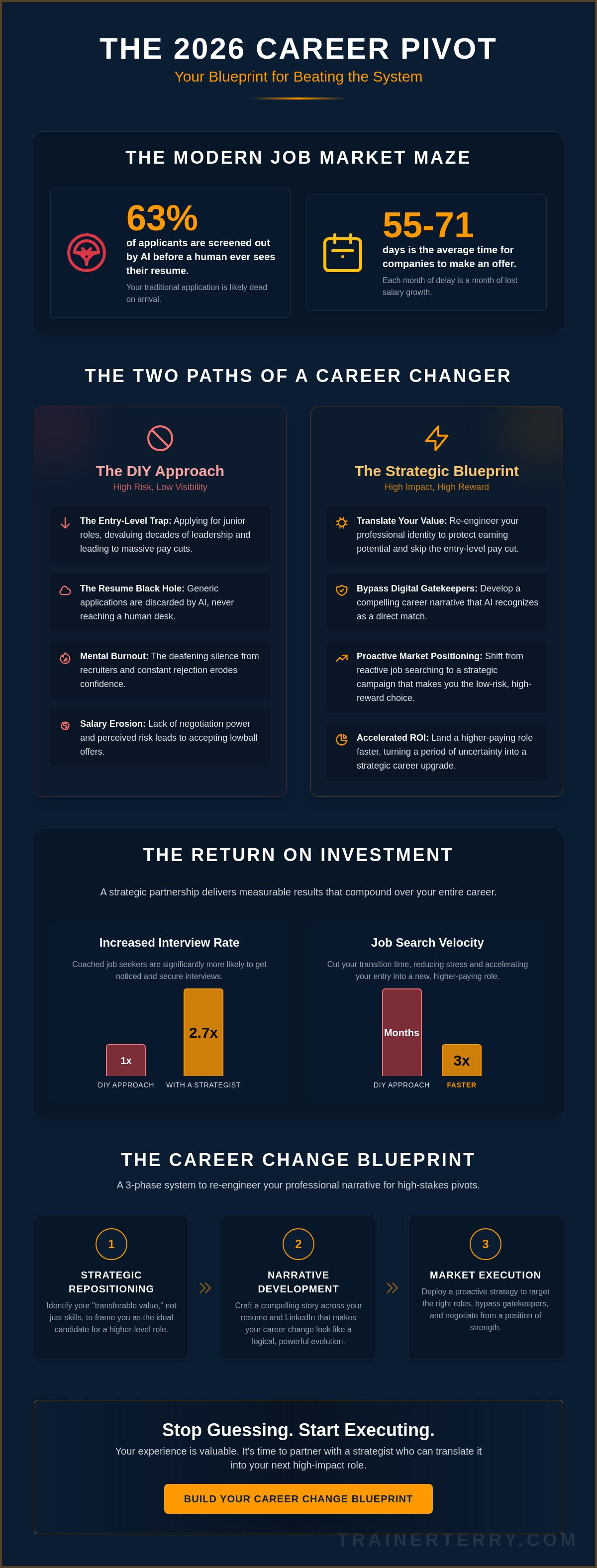
What if your resume isn't the problem, but your professional narrative is? In a 2026 job market where AI filters screen out 63% of applicants before a human even looks, sending another generic application is just shouting into a void. You're likely asking: is a career coach worth it for career changers who are tired of the "black hole" and ready for a real move? I get it. You've got years of hard-earned experience, yet you feel like a beginner because you can't translate those old wins into a new context. The fear of a massive pay cut is real, and the silence from recruiters is deafening.
You don't need more generic advice; you need a high-stakes strategic re-engineering of your professional identity. This analysis will show you how a structured blueprint can accelerate your transition and help you land a higher salary in your new field. We'll break down the latest ROI data, explore how to build a pivot narrative that sticks, and look at why coached job seekers are 2.7 times more likely to land interviews in today's selective climate. It's time to stop guessing and start executing a plan that works.
Key Takeaways
- Understand why the 2026 job market requires a strategic partnership rather than simple advice to break through modern industry silos.
- Determine if a career coach is worth it for career changers by analyzing the ROI of a structured transition versus the cost of months spent in a resume black hole.
- Recognize the critical difference between a career counselor and a strategist who uses executive level experience to protect your earning potential.
- Shift from reactive job searching to proactive market positioning with a Career Change Blueprint designed for high stakes professional pivots.
- Learn how to translate your existing leadership value into a new context so you can skip the entry level pay cut and land higher offers.
The 2026 Career Transition Reality: Is Coaching a Luxury or a Necessity?
Stop thinking about career coaching as a luxury. In 2026, it's a survival tool for anyone trying to jump fences between industries. You aren't just looking for "help"; you're entering a strategic partnership to re-engineer your professional worth. The 2026 job market is built on rigid silos. Companies are incredibly selective. They're taking 55 to 71 days on average just to make an offer. If you're trying to break in from the outside, you're facing the Hiring Manager’s Paradox. They see your talent, but they're terrified of your lack of industry tenure. They want a plug and play solution, not a project.
So, is a career coach worth it for career changers? Consider the alternative. Staying stuck in a role that drains you has a massive opportunity cost. Every month you spend sending resumes into the void is a month of lost salary growth and mental burnout. A strategist doesn't just fix your resume; they remove the friction that keeps you invisible to recruiters. You're investing in a shortcut to a room you aren't currently invited into.
The Shift from Transactional Advice to Strategic Positioning
Forget generic resume tips. In 2026, those are useless for a pivot. A career strategist identifies your "transferable value" rather than just "transferable skills." It's the difference between saying you can manage people and proving you can drive revenue in a high pressure tech environment using your healthcare leadership background. Career coaching ROI is measured by a 3x increase in job search speed, effectively cutting your transition time in half.
Why 2026 Requires a Different Approach
AI has changed the game. With 63% of candidates being screened out by automated systems before a human even blinks, your traditional application is dead on arrival. You need a deep Career Narrative Development strategy to bypass these digital gatekeepers. This isn't just about keywords; it's about building a story that makes your transition look like a logical evolution rather than a desperate leap. High stakes leadership roles in 2026 demand a level of positioning that you simply cannot achieve through DIY methods. You need to prove you're the low risk, high reward choice before you even step into the interview room.
The Hidden Risks of the DIY Career Change
Attempting a career pivot on your own isn't just difficult. It's a calculated risk with high stakes. When you go the DIY route, you're fighting against a system designed to keep you in your current lane. Recruiters and AI filters look for patterns, not potential. If your profile doesn't match the traditional industry "pedigree," the system simply discards you. This is where many professionals start to wonder: is a career coach worth it for career changers who have hit a wall? The answer lies in the invisible barriers you can't see but are definitely hitting.
One of the biggest traps is the "Entry-Level Trap." You feel like a newcomer, so you start applying for junior roles. This is a massive mistake. You're devaluing decades of leadership and execution. A DIY approach often leads to a messaging mismatch where your LinkedIn profile confuses recruiters rather than compelling them. If your narrative isn't tight, you're just noise in a crowded market. You need to be seen as a solution, not a transition project.
- Network Silos: Your current industry contacts can't open doors in a field where they have no influence.
- The Resume Black Hole: Without a specific strategy, your application never reaches a human desk.
- Salary Erosion: Accepting a lower offer because you don't know how to frame your value in a new context.
The Technical Barrier: ATS and AI Filters
In 2026, keyword stuffing is a dead strategy. AI systems are now sophisticated enough to detect when a candidate lacks the specific industry context they're looking for. Verified research shows that 63% of job seekers are screened out by AI systems before a human ever sees their application. A coach helps you hack this digital gatekeeper. We don't just add keywords; we re-engineer your narrative so the AI recognizes your "transferable value" as a direct match for the role's requirements.
The Psychological Barrier: The Confidence Gap
Imposter syndrome is the silent killer of career pivots. It shows up most clearly during salary negotiations. When you feel like you're "lucky to be there," you leave money on the table. You might think you have to take anything just to get your foot in the door. This mentality is dangerous and unnecessary. It leads to burnout before you've even started your new chapter. Before you commit to another month of silence, schedule a free strategy call to assess your pivot readiness and stop the cycle of rejection.
The Strategic ROI of a Career Change Blueprint
Stop settling for "cheerleading" sessions. Ad-hoc advice won't get you hired in a new industry in 2026. You need a system. A Career Change Blueprint is a structured, phase-based execution plan. It's the difference between throwing darts and having a GPS. Many skeptics ask: is a career coach worth it for career changers when information is free online? The value isn't in the information; it's in the architecture of your transition. You're paying for a proven framework that eliminates guesswork and protects your earning potential.
A structured blueprint moves you through four critical phases:
- Phase 1: Market Analysis. We identify where your specific value meets industry demand. No more applying to roles that don't fit.
- Phase 2: Rebranding. We rebuild your professional identity from the ground up, ensuring your resume and LinkedIn profile speak the language of your target industry.
- Phase 3: High-Performance Interviewing. We use tactical communication to prove you're a low-risk hire.
- Phase 4: High-Stakes Negotiation. We ensure you don't take a "newcomer tax" on your salary offer.
Translating Experience into New-Industry Currency
Think about a military officer moving to corporate leadership. A recruiter might only see "logistics." A strategist sees "crisis management under extreme pressure." You must translate your experience into new-industry currency. Use the STAR method to bridge the gap. Instead of talking about military drills, you talk about optimizing supply chains for 500+ personnel to meet high-stakes deadlines. This builds Executive Presence. You need to look and sound like a leader in their world before you ever get the title. It's about being seen as the solution they've been searching for.
LinkedIn Positioning as a Pivot Tool
Your LinkedIn profile is a landing page, not a graveyard for your past roles. Ditch the "Open to Work" banner immediately. It signals desperation, not value. You need to leverage how to use LinkedIn in 2026 to build an active personal brand. Your "About" section should be a compelling Career Narrative. It should explain why your move to a new field is the most logical step for the company's success. This is how you move from "stuck" to "strategically positioned." You aren't just changing jobs; you're evolving your career narrative to meet the market's highest demands.
Red Flags vs. Results: How to Vet a Career Coach for Your Pivot
Don't throw your money at a "feel-good" coach. If you're asking is a career coach worth it for career changers, the answer depends on one thing: are they a counselor or a strategist? A career counselor helps you deal with the emotional stress of being unhappy. That's fine, but it won't land you a role in a new industry. A career strategist builds a market execution plan. They treat your transition like a high-stakes product launch. If the person you're talking to doesn't have a clear, repeatable methodology, you're just paying for expensive cheerleading.
Mid-career professionals need an insider. You need someone who has sat on the other side of the desk. A coach with Corporate VP experience understands how decisions are actually made in the boardroom. They know why a candidate gets rejected even when they're perfectly qualified. If your coach has never hired hundreds of people, they're just guessing. Look for a methodology like a Career Change Blueprint. If they promise a "guaranteed job" or offer "generic templates," walk away. These are major red flags that signal a lack of real-world tactical strategy.
Transactional vs. Strategic Coaching
Transactional coaching is surface-level. It’s about quick resume edits and general "confidence boosting." While these things feel good, they don't move the needle in a competitive 2026 market. Strategic coaching focuses on market positioning, network engineering, and aggressive negotiation. During your discovery call, use this mental checklist to vet their authority:
- Do they have a structured process or do they just "talk through" your problems?
- Can they explain how they bypass AI filters without just relying on keyword stuffing?
- Do they understand the specific salary benchmarks and hidden requirements for your target industry?
- Are they willing to challenge your current narrative to make it objectively stronger?
The Value of an Insider Perspective
Hiring managers speak a secret language. They use specific terms to describe "culture fit" and "leadership potential" that never appear in the job description. An insider like Trainer Terry sees these invisible requirements because he's been the one writing them and making the final calls. You need a partner who can teach you to speak this language fluently. It's about more than just answering questions; it's about controlling the room and directing the narrative. If you want to stop guessing what recruiters want to hear, it's time to invest in 1:1 Job Interview Prep that actually works. You aren't just buying a service. You're buying the perspective of someone who has already seen the finish line. To ensure you're making the right investment, schedule a free strategy call to audit your current pivot plan.
Why the Career Change Blueprint is the Logical Choice
Stop wasting your energy on a broken process. Deciding if a career coach is worth it for career changers often comes down to one question: do you want a minor adjustment or a total professional overhaul? The 2026 market doesn't reward "trying your best." It rewards precision. You've already seen how AI filters and industry silos are built to keep you out. The Career Change Blueprint isn't just a guide; it's a high-performance engine designed to break those barriers. We move you from being stuck in a cycle of rejection to being strategically positioned as the only logical choice for your target role.
This program bridges the gap between where you are and where you belong. We combine executive-level hiring experience with tactical tools that most job seekers don't even know exist. You aren't just getting a new resume. You're getting a complete re-engineering of your professional identity. We address the 2026 market challenges head-on by turning your non-traditional background into your greatest competitive advantage. It's time to stop being a "candidate" and start being a solution.
Beyond the Resume: A Full-Spectrum Transition
The Career Change Blueprint is far more than a writing service. While others focus on fonts and formatting, we focus on a comprehensive Career Positioning Strategy. We analyze how you're perceived by VPs and hiring managers before you even speak. We fix the messaging mismatch that kills pivots. We ensure your narrative is so tight that your transition looks like an inevitable evolution rather than a risky leap. This level of strategic alignment ensures that this investment pays for itself in the very first month of your higher salary in your new field.
Taking the First Step
You don't have to figure this out in isolation. If you're looking for immediate insights and want to see how this works in real-time, join our Office Hours. It's a chance to get direct feedback and stop the exhausting DIY struggle that has led to nothing but silence. You've spent enough time sending resumes into the black hole. You've felt the fear of the pay cut and the frustration of being misunderstood. That ends today. Don't just change jobs; engineer a career leap that reflects your true value. Book your free strategy call today and let's build your blueprint for success.
Stop Guessing and Start Executing Your Pivot
The 2026 job market doesn't reward hope; it rewards strategic execution. You've seen the data. Sending another batch of resumes into the AI black hole won't change your results. It's time to decide if is a career coach worth it for career changers like you, or if you're willing to stay stuck in a role that no longer fits. We've explored how industry silos are harder to break and why a structured blueprint is the only way to bypass digital gatekeepers.
This isn't just about finding a job. It's about high-stakes positioning. Led by former Corporate VP Terry Jones with 20+ years of HR and Executive leadership experience, we provide the insider perspective you've been missing. You'll gain STAR Method Interview Mastery and a narrative that recruiters can't ignore. Stop the DIY struggle and take command of your professional trajectory. Master your pivot with the Career Change Blueprint and start your next chapter with total confidence. Your breakthrough is waiting. Let's go get it.
Frequently Asked Questions
How much does a career coach for career changers typically cost in 2026?
Specialized coaching for professionals in transition typically ranges from $220 to $550 per hour. Most serious career changers opt for comprehensive packages which generally cost between $320 and $1,300 depending on the level of support. When asking is a career coach worth it for career changers, you have to weigh this cost against the 5.7x average ROI that companies and individuals see from professional coaching investments.
Can a career coach help me if I don’t know what industry I want to move into?
Yes, a strategic coach uses market analysis and value mapping to identify high-growth sectors that match your existing strengths. We don't just ask what you like; we look at the 2026 market data to see where your leadership experience is in highest demand. This phase ensures you don't waste months pursuing a field that doesn't offer the growth or salary you deserve.
Is a career coach worth it for someone over 50 changing careers?
Coaching is essential for professionals over 50 because it provides the tools to neutralize age bias and rebrand "years of service" as "strategic wisdom." Since 82% of career changers over 40 report higher job satisfaction after a successful move, the investment is clearly justified. Determining if a career coach is worth it for career changers in this demographic is about protecting your peak earning years and avoiding the "entry-level" pay trap.
How long does it typically take to see results from career coaching?
You can expect to see a significant increase in interview requests within 90 days of starting a structured program. While the average 2026 job search takes between 55 and 71 days, coached candidates are 2.7 times more likely to land interviews early in the process. We focus on immediate rebranding in the first two weeks so you can start testing the market with your new narrative as soon as possible.
What is the difference between a career coach and a recruiter?
A recruiter is paid by the company to find a specific person for a specific seat; a coach is paid by you to build your entire career strategy. Recruiters won't help you translate your skills or negotiate for a higher salary in a new industry. A coach is your personal strategist who ensures you are positioned to win regardless of which company is hiring or which recruiter is calling.
Will a career coach write my resume for me or just give me advice?
Strategic coaching goes beyond advice to provide actual Resume Strategy and Executive Resume Development. We don't just "fix" your bullet points. We re-engineer your entire document to pass AI filters that screen out 63% of applicants. You get a high-performance tool that speaks the language of your target industry and proves your value before you ever step into the room.
Can coaching help me avoid taking a pay cut when I change industries?
Avoiding a "newcomer tax" is a core focus of a structured Career Change Blueprint. By identifying your transferable value rather than just your transferable skills, we position you for mid-level or senior roles instead of entry-level spots. Research shows that 77% of career changers earn as much or more than they did before their transition within two years of making the move.
What happens if I hire a coach and still can’t find a job?
Coaching is a results-oriented partnership that requires consistent execution of the blueprint. If you aren't seeing movement, we perform a deep-dive audit of your market positioning and interview performance to find the friction points. The 2026 market is selective, so we adjust your narrative and outreach strategy until it matches the specific requirements of the hiring managers you are targeting.

Article by
Terry Jones
Terry Jones is the Founder and Chief Career Strategist of the Career Advancement Blueprint and Executive Coach and Lead Consultant at FireBridge Consulting.
As an ICF Certified Accredited Career Coach and Certified Master Career Services professional, he partners with professionals at all levels, including senior leaders and executives, to navigate career transitions, secure new opportunities, and position themselves for advancement. His approach goes beyond surface level coaching, focusing on how individuals think, communicate, and lead so they can operate with clarity, authority, and strategic intent in high stakes environments.
In his work as an executive coach, Terry engages in high impact advisory conversations that help leaders strengthen decision making, elevate their presence, and align their leadership style with organizational expectations. He is known for helping clients translate their experience into influence, ensuring they are not only seen for what they have done, but trusted for what they are capable of leading next.
With over 20 years of corporate experience, including serving as a Vice President and leading Learning and Development functions for three New York City organizations, Terry brings a deep understanding of how companies evaluate talent, develop leaders, and make promotion decisions. This allows him to bridge the gap between individual ambition and organizational reality.
His insights have reached over 630,000 followers and generated more than 70 million video views, where he shares direct, experience driven guidance that helps professionals think differently and take action.