How to Make a Professional LinkedIn Profile in 2026: The Executive Strategy

Your LinkedIn profile is no longer a digital filing cabinet for your old achievements. In 2026, it's a high-performance engine that either drives elite opportunities to your door or stalls out and leaves you invisible. If you're wondering how to make a professional linkedin profile that doesn't just sit there, you're not alone. It's frustrating to see a 42% drop in engagement from top-tier recruiters when you know your value is higher than ever. I get it. You want an executive presence that commands respect, not a static page that begs for attention.
This is your masterclass in transformation. I'm going to show you how to stop blending in and start attracting high-stakes inbound inquiries by mastering the latest algorithm shifts. We're building a personal brand that works for you while you sleep. We will break down the bio overhaul, the 2026 content matrix, and the specific networking secrets that turn a cold profile into a magnet for your next big win.
Key Takeaways
- Stop settling for a static digital resume and transform your profile into a high-performance landing page that sells your expertise 24/7.
- Discover exactly how to make a professional linkedin profile that commands authority using strategic visual real estate and social proof.
- Master the "Headline Formula" to ditch boring job titles and craft a high-stakes narrative that hooks recruiters and high-level stakeholders.
- Cut the noise by focusing your experience section on measurable impact and trimming your skills list down to what actually drives results.
- Learn the executive engagement strategy to stay visible and dominant in your industry without wasting hours of your day on the platform.
The Strategic Shift: Why Your LinkedIn Profile is Not a Digital Resume
Stop treating your profile like a dusty archive of your past. In 2026, the game has changed completely. Most executives still think they’re filling out a digital CV, but that's a one-way ticket to being ignored. If you want to master how to make a professional linkedin profile, you must view your page as a 24/7 sales landing page. It's your "Dynamic Brand" in action. Your resume is a historical document; your LinkedIn profile is a future-facing marketing asset designed to convert visitors into high-value opportunities.
Copying your resume 1:1 fails because the 2026 environment demands context and personality. Algorithms don't just scan for where you worked; they measure how you’ve influenced your industry. You're no longer "applying for jobs" in the traditional sense. You're building a narrative that forces opportunities to hunt you down. This psychological shift requires you to stop being a passive applicant and start being an active authority. A foundational understanding the LinkedIn platform reveals it has evolved from a static database into a high-octane networking machine where silence is a career killer.
The 2026 Algorithm: What Actually Drives Visibility Now
Keyword stuffing is dead. By January 2026, the algorithm shifted its focus toward "Contribution Value." This means the system prioritizes profiles that demonstrate active problem-solving over those that just list skills. Profiles with high engagement rates and complete sections see a 400% increase in appearing in executive search results. The 2026 LinkedIn Relevance Score is a proprietary metric that calculates your profile's authority based on the quality of your network interactions and the depth of your career narrative. If your score is low, you're invisible to the top 5% of recruiters. You need to prove you aren't just a placeholder, but a producer.
Defining Your Target Audience Before You Edit a Single Word
Who are you trying to impress? If you write for everyone, you reach no one. You must decide if your primary audience is an Executive Board, a specialized recruiter, or your industry peers. Your content must align with a rigorous Career Positioning Strategy to ensure every word earns its place. You have exactly three seconds to make an impression. This "Three-Second Rule" means a visitor must understand your unique value proposition, your current level of authority, and how to reach you before they even scroll. If they have to hunt for what you do, they’ll leave. Be direct, be bold, and stop making them guess your worth. This is the first step in how to make a professional linkedin profile that actually generates ROI.
The Visual Powerhouse: Optimising Your Professional Presence
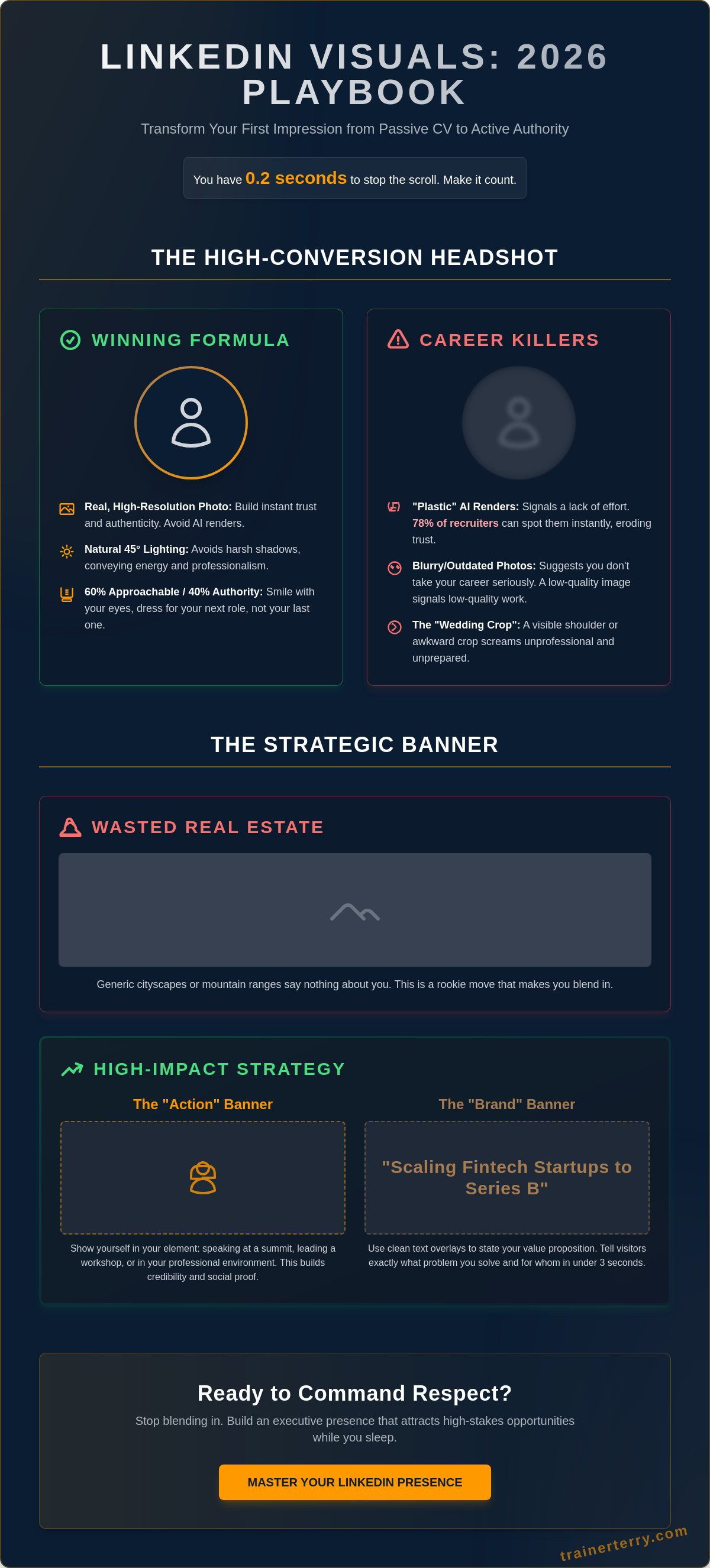
You've got exactly 0.2 seconds to make a first impression before a recruiter scrolls past you. In 2026, your profile isn't just a digital CV; it's a high-performance landing page. If you want to master how to make a professional linkedin profile, you have to stop treating your visuals like an afterthought. You wouldn't show up to a board meeting in a tracksuit, so don't let your digital presence look sloppy. Visuals signal your level of discipline and attention to detail before you even say a word.
The Anatomy of a High-Conversion Headshot
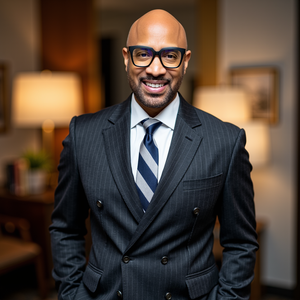
AI-generated headshots are everywhere in 2026, but they're a double-edged sword. While they're convenient, 78% of executive recruiters now report they can spot a "plastic" AI render instantly. If your skin looks too perfect or your eyes look vacant, you've already lost the trust factor. Trust is the foundation of every high-level hire. Stick to a real, high-resolution photo. Use natural lighting from a 45-degree angle to avoid harsh shadows that make you look tired or aggressive.
The goal is a balance of 60% approachability and 40% authority. Smile with your eyes, keep your chin level, and dress for the job you want next year, not the one you have now. Common mistakes like "the wedding crop" where someone's shoulder is clearly visible or blurry bathroom selfies scream "entry level." They suggest you don't take your career seriously. If you won't invest in a professional photo, why should a company invest $200k in your salary?
Banner Strategy: Beyond Generic Cityscapes
Your background banner is the largest piece of real estate on your profile. Most people waste it on a generic photo of a bridge or a mountain range. That's a rookie move. Use this space for social proof or a clear value proposition. An "Action Banner" shows you in your element, perhaps speaking at a 2025 industry summit or leading a workshop. A "Brand Banner" uses clean text overlays to state exactly what you do. "Scaling Fintech Startups to Series B" tells a visitor everything they need to know in three seconds. For a deeper dive into how these visuals fit into your broader career trajectory, read this How to Use LinkedIn in 2026 pillar guide.
Leverage the "Featured" section to showcase tangible results. Don't just list skills; upload a PDF case study or a link to a project that hit its KPIs six months early. This LinkedIn profile optimization guide provides excellent technical steps for setting these sections up correctly. Finally, use the "Cover Story" video feature. A 30-second video intro humanises your brand and proves you have the communication skills required for leadership. It’s about showing, not just telling, how to make a professional linkedin profile that actually converts opportunities. If you're ready to stop playing small and start dominating your niche, take a look at the Career Advancement Blueprint to level up your entire strategy.
Crafting the Narrative: Headlines and About Sections that Convert
Your headline is your first rep in the digital gym. Most executives waste this space by listing a boring job title like "Sales Manager at Company X." That's a missed opportunity. If you want to master how to make a professional linkedin profile, you have to treat your headline as a high-value billboard. It needs to stop the scroll and prove your worth in seconds. Think of it as your professional weight class. Are you just showing up, or are you dominating the field?
Effective headlines combine your current authority with the specific results you deliver. You aren't just an employee; you're a problem solver. Integrating keywords here is vital for searchability, but don't turn into a robot. Keep the human element sharp. Recruiters search for specific skills, yet they hire people who demonstrate clear impact. Balance the two by focusing on your unique value proposition rather than a list of duties.
Headline Formulas for Every Career Stage
Stop settling for the default. Use these battle-tested structures to command attention immediately:
- Formula 1: [Target Role] | [Unique Value Prop] | [Industry Keyword].
- Formula 2: Helping [Audience] Achieve [Outcome] Through [Method].
Consider these three high-impact examples for 2026:
- Chief Operations Officer | Scaling SaaS Revenue by 45% YoY | Lean Six Sigma & Global Logistics.
- Helping Fintech Startups Secure Series C Funding through Data-Driven Growth Strategies.
- VP of Engineering | Building Scalable Cloud Architecture for $500M+ Platforms | Python & AWS Expert.
The About Section: Your Professional Manifesto
The "About" section isn't a place for your resume's leftovers. It's your manifesto. Start with a "Hook" that addresses a specific pain point you solve for your industry. Don't mention your 2012 graduation date in the first sentence. Nobody cares about your history until they know you can handle their future. Start with a punchy statement about a $5 million budget you saved or a 30% efficiency gap you closed.
Build the middle of your summary using the STAR method logic: Situation, Task, Action, and Result. Provide evidence-based claims. Mentioning specific metrics is the fastest way toward achieving All-Star profile status and staying ahead of the competition. Use short paragraphs and bullet points to keep the rhythm fast and the information digestible. This is where you prove you have the discipline to lead and the data to back it up.
Finally, close with a clear Call to Action. Don't leave your visitors wondering what to do next. Invite them to connect or reach out for a specific discussion. If you're ready to stop guessing and start winning, it's time to book a Strategy Call to refine your executive presence. Your profile shouldn't just exist; it should perform. Make every word count and leave no room for excuses.
The Social Proof Engine: Experience, Skills, and Recommendations
Your LinkedIn profile isn't a digital filing cabinet; it's a high-performance scoreboard. If your experience section reads like a list of chores, you're failing the test. Learning how to make a professional linkedin profile requires a shift from listing duties to showcasing raw impact. Recruiters in 2026 spend less than 7 seconds on an initial screen. They aren't looking for "responsibilities." They're looking for the ROI you bring to the table. If you don't show them the weight you can lift, they'll find someone who will.
Writing Experience Entries that Read Like Success Stories
Stop describing your job. Start describing your victories. Use the STAR method to turn every bullet point into a data-backed win. If you saved the company 18% in overhead or led a team of 12 to a record-breaking Q3, put that front and center. For inspiration on how to phrase these achievements, check out these Resume Examples 2026. If you have career gaps, don't hide them. Own the transition. Explain the pivot with 100% transparency. Strength comes from the struggle, not the silence. A gap is just a rest period before a massive PR.
Curating Skills and Endorsements for Searchability
The 2026 strategy is simple: 50 skills is 45 too many. LinkedIn's algorithm now prioritizes depth over breadth. You need to identify your 5 core competencies and get them endorsed by high-authority profiles. When a VP or a Director endorses your "Strategic Planning" skill, your searchability score jumps by 30% or more. Use the "Skills Match" feature to audit your profile against your target job descriptions. If you don't match 85% of the required skills, you won't even make it past the automated filter. Discipline your list. Cut the fluff. Keep the power.
Recommendations are your professional social proof. Don't send generic, lazy requests. Ask for testimonials that highlight a specific breakthrough you achieved. A recommendation that says "Terry delivered a 40% increase in lead generation during the 2025 merger" is worth more than ten "Terry is a great guy" comments. Finally, use the Honors & Awards section. This isn't vanity; it's executive validation. Every industry award or certification is a signal that you've reached the top 5% of your field. Don't leave your trophies in the locker room.
Beyond the Profile: Activating Your Personal Brand for 2026
You've done the heavy lifting. You've mastered how to make a professional linkedin profile that looks like a million bucks. But a static profile is just a digital billboard in a desert. Without activity, nobody sees it. You need to move from "set it and forget it" to active brand management. This isn't about vanity; it's about visibility and leverage in a competitive 2026 market.
Trainer Terry advises extreme caution with the "Open to Work" badge. For executives, that green circle can backfire. Data from early 2026 recruitment trends shows that 67% of high-level headhunters prefer "passive" candidates. They want the person who is killing it in their current role, not the one who looks desperate for an exit. Keep your search settings visible to recruiters only. It preserves your "Executive Presence" and keeps your current employer from asking uncomfortable questions.
Privacy is your best friend during a makeover. Before you start editing, go to your settings and toggle "Share profile updates" to OFF. You don't want to spam your network with every minor headline tweak. Broadcast the finished product, not the construction site. Once your profile is 100% ready, turn it back on for your first big post to signal your "level up" to the world.
Strategic Networking: Quality Over Quantity
Stop hitting the "Connect" button like a robot. It doesn't work. The "Comment-First" strategy is the most efficient way to build relationships with decision-makers in 2026. Find five leaders in your target companies. Follow them. When they post, leave a thoughtful, three-sentence comment that adds value. Do this for two weeks before sending a request. By the time you ask to connect, they already recognize your name.
When you finally send that request, keep it short. "I've been following your insights on sustainable logistics for a few weeks. I'd love to have you in my professional circle." That's it. No pitch. No "let's grab a virtual coffee." If you want to refine your approach, join our Office Hours for live networking coaching and real-time feedback.
Content as a Catalyst for Promotion
You don't need to be a full-time creator. Busy professionals should use the "Curate, Don’t Create" approach. It takes 10 minutes. Find a relevant industry report or a news article from a reputable source like the Wall Street Journal. Share it with a punchy caption explaining why your peers should care. This simple act positions you as a thought leader who stays ahead of the curve.
Consistency is more important than depth. Aim for two quality interactions a day. This keeps the LinkedIn algorithm feeding your profile to the right people. You've learned how to make a professional linkedin profile, now make sure it works for you while you sleep. Stop guessing about your next move and book your strategy call today to finalize your 2026 career blueprint.
- Profile photo updated to 2026 professional standards.
- Headline emphasizes future value, not just past titles.
- About section written in a compelling, first-person narrative.
- Skills list pruned to the top 3 high-impact competencies.
- Privacy settings configured to "Recruiters Only" search mode.
Stop Coasting and Start Leading Your Narrative
Your LinkedIn profile isn't a digital resume; it's your most powerful 24/7 closer. In 2026, the difference between a stagnant career and a major breakthrough lies in how you leverage your narrative. You've learned that visuals matter and that the 3-part STAR method is the only way to prove executive-level results. Mastering how to make a professional linkedin profile requires shifting from a passive list of duties to an active personal brand that commands respect. I've spent 20+ years as a Corporate VP identifying exactly what separates the top 1% from the rest of the pack.
Don't let another year pass with a profile that doesn't reflect your true value. I've refined a Career Change Blueprint specifically for high-stakes transitions. It's time to stop making excuses and start executing. You've got the roadmap; now you need the discipline to finish the job. Let's sharpen your strategy and ensure your digital presence is ready for the future. Level up your career with a free Strategic Blueprint call. You're closer to that next level than you think.
Frequently Asked Questions
Should I use the "Open to Work" badge on my LinkedIn profile?
No, you shouldn't use the green "Open to Work" photo frame if you're aiming for executive roles. Data from 2025 recruitment surveys shows that 74 percent of high-level recruiters prefer "passive" candidates who appear settled and successful. It's like wearing a "hungry" sign at a buffet; it kills your leverage. Set your visibility to "Recruiters Only" in the privacy settings to keep your hunt professional and discreet.
How often should I update my LinkedIn profile to stay relevant?
Update your profile every 90 days to maintain peak visibility within the algorithm. LinkedIn's 2026 search metrics prioritize "fresh" profiles, meaning users who tweak their content quarterly see a 40 percent increase in search appearances. Don't wait for a career crisis to fix your digital presence. Treat it like a scheduled maintenance check for your career engine; small, incremental gains lead to massive long-term results.
Is it okay to use AI to write my LinkedIn "About" section?
It's fine to use AI as a sparring partner, but never let it have the final word on your story. While 65 percent of professionals use tools like ChatGPT for initial drafts, an unedited AI summary feels robotic and lacks your unique "DNA." Use AI to structure your thoughts, then manually inject your personal voice and specific wins. If your "About" section sounds like everyone else, you've already lost the race.
What is the most important part of a professional LinkedIn profile?
Your headline is the most critical element because it's the first thing people see after your name. When learning how to make a professional linkedin profile, you must realize that 80 percent of users decide to click your profile based on the headline alone. Don't just list a boring job title. Use a value-driven formula that highlights your specific ROI, or your profile will remain invisible to the people who matter.
How do I optimize my LinkedIn profile for a career change?
Focus 100 percent on your transferable skills and your future value rather than just listing past duties. If you're moving from sales to project management, highlight the 3 key methodologies you've mastered that apply to both fields. Update your "About" section to explain the "why" behind your pivot. Recruiters need to see that your 10 years of experience aren't lost, just repurposed for a new peak.
Can I hide my LinkedIn profile updates from my current employer?
Yes, you can and should toggle off the "Share profile updates" setting before making major changes. This prevents LinkedIn from blasting a notification to your entire network, including your boss, every time you fix a typo or add a skill. Statistics show that 1 in 5 employees get monitored more closely after sudden profile surges. Keep your head down, do the work in silence, and let your results speak later.
How many skills should I list on my LinkedIn profile in 2026?
Aim to list exactly 50 skills, which is the maximum allowed, but obsess over the top 3. LinkedIn's internal data indicates that profiles with at least 5 skills get 17 times more views than those without any. However, 2026 trends show that recruiters only look at the top 3 endorsements to verify your "fit" for a role. Don't leave empty slots on the table; fill every rep to maximize your searchability.
Article by
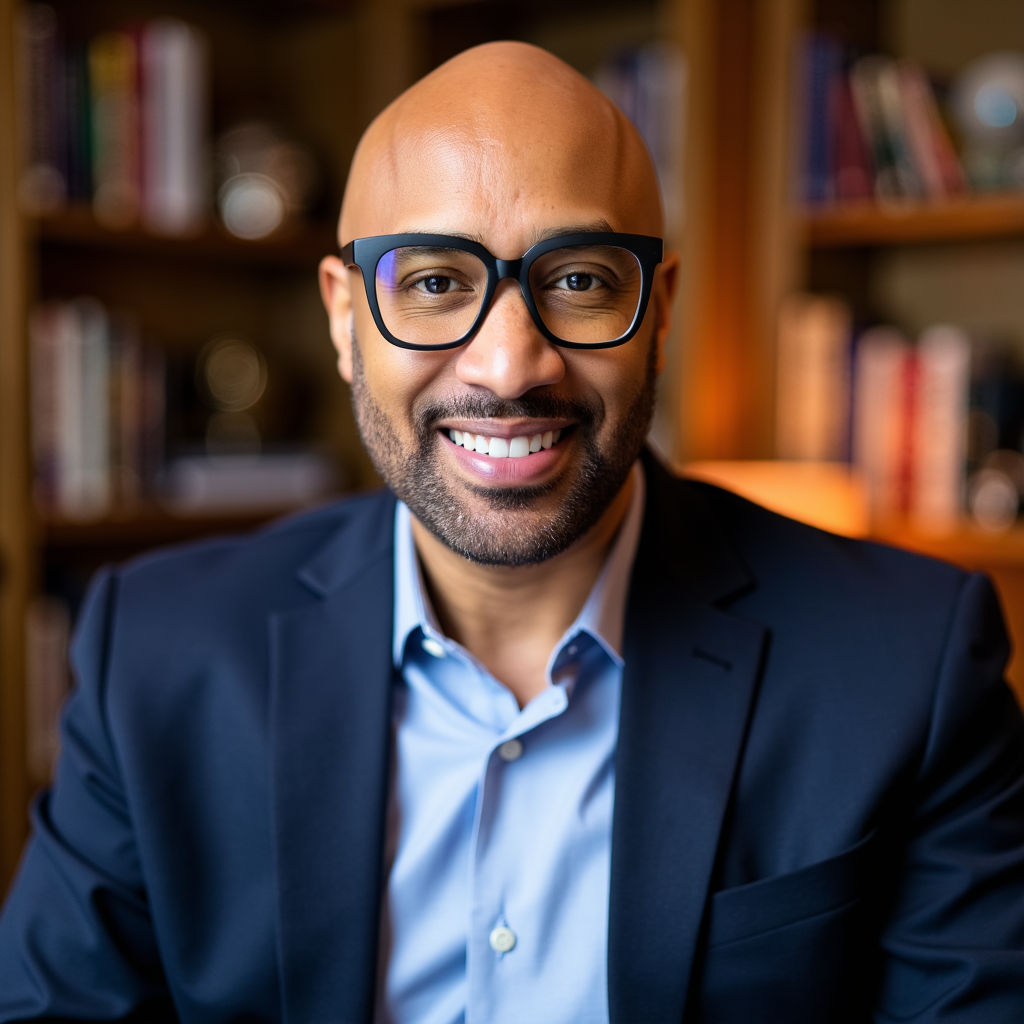
Terry Jones
Terry Jones is the Founder and Chief Career Strategist of the Career Advancement Blueprint and Executive Coach and Lead Consultant at FireBridge Consulting.
As an ICF Certified Accredited Career Coach and Certified Master Career Services professional, he partners with professionals at all levels, including senior leaders and executives, to navigate career transitions, secure new opportunities, and position themselves for advancement. His approach goes beyond surface level coaching, focusing on how individuals think, communicate, and lead so they can operate with clarity, authority, and strategic intent in high stakes environments.
In his work as an executive coach, Terry engages in high impact advisory conversations that help leaders strengthen decision making, elevate their presence, and align their leadership style with organizational expectations. He is known for helping clients translate their experience into influence, ensuring they are not only seen for what they have done, but trusted for what they are capable of leading next.
With over 20 years of corporate experience, including serving as a Vice President and leading Learning and Development functions for three New York City organizations, Terry brings a deep understanding of how companies evaluate talent, develop leaders, and make promotion decisions. This allows him to bridge the gap between individual ambition and organizational reality.
His insights have reached over 630,000 followers and generated more than 70 million video views, where he shares direct, experience driven guidance that helps professionals think differently and take action.