Executive Business Coach: The 2026 Guide to Leadership Acceleration

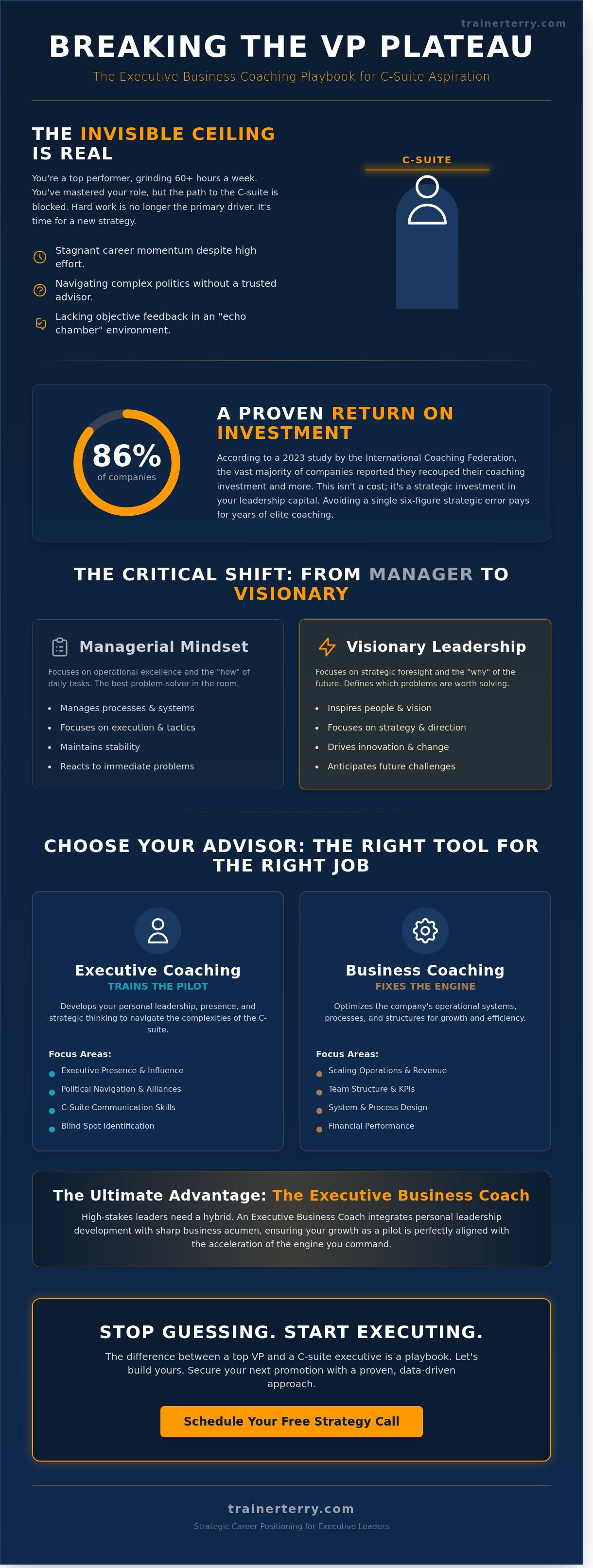
You've hit the VP level, you're grinding 60 hours a week, and yet the C-suite feels like it's behind bulletproof glass. Hard work stopped being the primary driver of your success three years ago. A 2023 study by the International Coaching Federation found that 86% of companies saw a clear return on investment when they hired an executive business coach for their leadership talent. You aren't failing; you're just playing a high-stakes game without a professional playbook. It's time to stop guessing and start executing.
It's frustrating to feel stuck when you know you're capable of commanding the room. You're likely tired of navigating complex corporate politics without a neutral sounding board to check your blind spots. This guide is your tactical roadmap to breaking that plateau. You'll learn exactly how to identify, evaluate, and collaborate with a mentor to sharpen your executive presence and secure your next internal promotion. We're going to dive into the 2026 framework for leadership acceleration, the red flags to avoid when hiring, and the specific metrics that prove your growth is real. Let's get to work.
Key Takeaways
- Identify the "invisible ceiling" holding your career back and learn how a hybrid mentor-advisor role provides the strategic breakthrough you need.
- Navigate the critical differences between leadership and organizational coaching to see why a specialized executive business coach is the most effective choice for VPs.
- Use our non-negotiable high-performance checklist to evaluate advisors based on real-world corporate experience, ensuring you avoid unqualified "life coaches."
- Master the art of the coaching session by setting "Executive KPIs" that turn strategic advice into immediate, measurable professional growth.
- Adopt a results-driven "tough love" approach to leadership that eliminates corporate fluff and focuses entirely on high-stakes career positioning.
What is an Executive Business Coach and Why Do High-Performers Need One?
You didn't reach the VP level by accident. You ground out the hours, crushed your KPIs, and led your teams through every crisis. But suddenly, the ladder feels like it's missing a few rungs. You've hit the "Invisible Ceiling." This isn't a lack of talent; it's a shift in the game's rules. Standard corporate training won't save you here because it's built for the middle of the pack, not the top 1%. An executive business coach acts as a hybrid force in your career. They're part leadership mentor and part strategic business advisor, focusing on the high-level psychological and tactical shifts required to dominate at the next level.
Forget the outdated myth that coaching is remedial or a "fix" for struggling employees. That's old-school thinking that will keep you stuck. In reality, elite performance training is for the winners who want to stay winning. According to a 2023 study by the International Coaching Federation, 86% of companies reported that they recouped their initial investment in coaching and then some. To understand the foundational shift in this role, you should look at What is an Executive Business Coach to see how it differs from basic life coaching. Executive business coaching is a strategic partnership that bridges the gap between senior management skills and total C-suite readiness.
The Shift from Manager to Visionary Leader
The skills that got you into senior management will not get you a seat on the board. Management is about operational excellence and the "how" of daily tasks. Leadership is about strategic foresight and the "why" of the future. You have to stop being the best problem-solver in the room and start being the person who defines which problems are worth solving. An executive business coach helps you cultivate "Executive Presence," ensuring your voice carries weight when the stakes are highest. If you can't make this transition, you'll remain a high-level executor while others make the visionary decisions.
The Cost of Going It Alone
Isolation is a silent career killer. As you climb higher, the "echo chamber" effect takes over. People start telling you what you want to hear instead of what you need to know. This lack of objective feedback is dangerous. A 2022 survey found that 50% of CEOs experience feelings of loneliness, which directly correlates to a 15% drop in decision-making accuracy. You can't afford that margin of error. An objective third party prevents these blind spots and protects your reputation. Think about the math: avoiding just one $100,000 strategic misstep pays for your coaching for years. Stop guessing and start executing with precision. If you're ready to sharpen your edge, schedule a free strategy call today and let's get to work.
Executive Coaching vs. Business Coaching: Choosing Your Path
You're playing a high-stakes game. If you want to win, you need to know which tool to grab. Business coaching and executive coaching aren't the same thing, even though people mix them up constantly. Think of it like this: business coaching fixes the engine, while executive coaching trains the pilot. You can have a billion-dollar engine, but if the pilot doesn't know how to handle the pressure, the whole thing crashes.
If you're a professional aiming for the C-suite, you can't afford to choose just one side. You need an executive business coach who understands both the balance sheet and the boardroom dynamics. This hybrid approach ensures you don't just build a successful department; you build the personal authority to lead it. Working with an executive business coach provides the dual-lens perspective required to align your personal growth with the company's aggressive scaling targets.
When to Hire a Business Coach
Hire a business coach when the numbers don't add up or the operational gears are grinding. This focuses on the "What" and the "How." If you're an entrepreneur transitioning to a CEO role, you need systems. You're looking at scaling operations, increasing revenue growth, and designing team structures that don't collapse under pressure. A 2023 industry report found that 70% of business owners who receive coaching see a massive increase in work performance. You're building a machine that works without you needing to micromanage every single bolt.
When to Hire an Executive Coach
Focus on your internal software. This is about the "Who," meaning your personal brand, your influence, and your emotional intelligence. You hire an executive coach when you need to navigate internal politics, board relations, or a major promotion. Why High-Performers Need One comes down to self-awareness. If your communication style is hitting a ceiling, no amount of operational scaling will save your career. You're refining your leadership presence to command respect the moment you walk into a room.
In high-stakes environments, the margin for error is zero. You're dealing with 60-hour weeks and multi-million dollar decisions where every word you speak is scrutinized. This is where executive career coaching becomes your secret weapon. It's not just about surviving the current quarter; it's about dominating the field in 2026 and beyond. You need to be the person who stays calm while everyone else is panicking.
Don't let indecision stall your progress. If you're ready to stop making excuses and start executing at a higher level, you can schedule a free strategy call to map out your next move. It's time to decide if you're going to stay where you are or level up.
How to Evaluate an Executive Business Coach: The High-Performance Checklist
Stop treating your career like a hobby. If you want to sit at the big table, you need a mentor who's already cleared the plates. An executive business coach isn't there to hold your hand or offer "safe spaces." They're there to sharpen your edge and tell you the truths your subordinates are too scared to whisper. You need three non-negotiables before you sign a contract: proven corporate experience, a repeatable methodology, and raw chemistry. If any of these are missing, you're just burning cash.
Don't fall for the "life coach" trap. There's a 40% rise in generalist coaches who claim they can handle C-suite problems without ever having managed a P&L statement. You wouldn't take fitness advice from someone who's never lifted a weight, so don't take leadership advice from someone who's never survived a board meeting. You need a practitioner, not a theorist.
The "VP Test": Does Your Coach Have Corporate DNA?
A coach who hasn't sat in the C-suite can't coach the C-suite. It's that simple. Certifications are fine, but they don't replace the 15 years of scar tissue earned in the trenches. You need a mentor who has managed multi-million dollar budgets, specifically those exceeding $10M, and led teams of 100 people or more. Ask them about the 9:00 AM crisis calls or how they handled a 20% staff reduction while maintaining morale. If they can't give you a play-by-play of a real-world corporate battle, they don't have the DNA you need to level up.
Methodology Matters: STAR, Blueprints, and Strategy
Avoid coaches who offer "just talk" sessions. If there's no structure, there's no growth. Look for an executive business coach who utilizes frameworks like the STAR method for high-stakes communication or promotion strategy. Every session must end with three actionable takeaways you can implement by Monday morning. You're looking for a tactical blueprint, not a therapy session. For a deeper look at what a high-level roadmap entails, check out this Career Positioning Strategy designed for 2026 growth.
Corporate politics is a blood sport. Your coach needs to be a grandmaster at navigating it. Test them during your discovery call. Present a scenario where two SVPs are actively blocking your department's initiative. If their answer is "try to build a bridge," they're too soft for your goals. You need strategies for leverage, alliance building, and optics management. Ready to see how the pros break it down? Read our guide on Choosing the Right Executive Coaching Firm to find a partner that matches your intensity.
How to Maximize Your ROI: A Practical Guide to Coaching Sessions
Investment without execution is just a hobby. If you hire an executive business coach, you aren't paying for a chat; you're paying for a transformation. To see a 3x return on your time, you must approach every session with the same discipline you bring to a quarterly earnings call. Stop winging it. Real growth requires a blueprint and the grit to follow through.
Pre-Session Preparation
Don't show up cold. Your preparation dictates your progress. Before every 60-minute session, you need to define your "Top 3 Hurdles." These are the specific roadblocks standing between you and your next promotion or project milestone. Are you struggling with a difficult board member? Is your decision-making slowing down? Write it down before the clock starts ticking.
- Gather the data: Bring your latest performance reviews or 360-degree feedback. If a meeting went sideways on October 12th, bring the notes. Leaders who use real-world data in coaching sessions see a 35% faster skill acquisition rate.
- Set a specific session goal: Decide exactly what success looks like for that hour. "I want to leave with a strategy for the Friday keynote" is much better than "I want to talk about speaking."
You also need radical transparency. Your executive business coach isn't your boss or your spouse; they're your partner in the trenches. If you hide your weaknesses, you're just paying someone to help you fail. Be honest about your fears and your failures. Transparency speeds up the breakthrough process by 40% compared to those who hold back.
Measuring Success Beyond the Session
We don't track "vibes" here. We track "Executive KPIs." You need to see tangible behavioral changes in high-pressure environments. Are you maintaining composure when a project misses a deadline? Are you delegating 20% more of your low-impact tasks? These numbers don't lie. They show whether you're actually leveling up or just talking about it.
Look at your team performance. A leader with true executive presence usually creates a 15% lift in team engagement scores within the first six months of coaching. You can also use 1:1 job interview prep as a benchmark for your communication growth. If you can't sell your vision in a high-stakes interview scenario, you aren't ready for the C-suite yet. Use these sessions to pressure-test your presence under fire.
The Trainer Terry Approach: Strategic Career Positioning
Terry Jones didn't learn leadership from a textbook. He spent 22 years in the trenches as a corporate VP, managing multi-million dollar budgets and leading teams through high-stakes mergers. As an executive business coach, he brings that raw, real-world experience to the table. His style is built on "tough love." He cuts through the corporate fluff and "circle back" culture that stalls careers. You won't find vague advice here. Instead, you get a results-oriented methodology designed to produce a 15% to 20% increase in leadership efficiency and career velocity.
The core of this transformation is the Career Advancement Blueprint. This isn't a suggestion; it's a strategic mandate for leaders who are tired of being overlooked. Terry focuses on the 80/20 of career growth, identifying the few high-impact behaviors that actually drive promotions and board-level recognition. If you're ready for high-level group advisory and want to stop making excuses for your plateau, join Office Hours to get direct feedback on your trajectory.
From Resume to Boardroom
Being "great at your job" is a trap. It makes you indispensable in your current role, which is exactly why you aren't getting promoted. Terry’s coaching shifts your focus from tactical execution to strategic influence. This transition starts with your professional narrative. By integrating these resume examples and optimizing your LinkedIn presence, you stop looking like a manager and start looking like a solution for the board.
Executive search firms don't care that you met your KPIs. They care about how you mitigated a 12% market downturn or how you scaled a department by 40% in eighteen months. Terry helps you develop a narrative that speaks the language of the boardroom. You need to become the only choice for the promotion by proving your ROI before you even step into the interview room. We strip away the modest language and replace it with hard data and authoritative positioning.
Taking the Next Step
Success isn't an accident; it's a sequence. The Trainer Terry journey follows a strict three-phase process:
- Assessment: A brutal, honest look at your current leadership gaps and market value.
- Strategy: Mapping out the specific political and professional moves required for your next level.
- Execution: Relentless implementation of the plan until the offer letter is signed.
Don't wait for the promotion. The "wait and see" approach is a slow death for your ambitions. Take the strategy to get it now. If you're finished with the status quo, explore the Career Advancement Blueprint for immediate implementation. The window for 2026 executive placements is closing fast. Stop dreaming about the corner office and start executing the plan to take it.
Own Your 2026 Leadership Trajectory
You've got the talent, but talent alone won't secure a C-suite seat in today's competitive market. Leadership acceleration requires a disciplined approach to strategic career positioning. We've covered why high-performers stall when they lack a clear roadmap and how the right executive business coach bridges that gap. You need a system that works as hard as you do. Terry leverages 20+ years of Corporate VP experience to help you master the specialized STAR-method promotion strategy and implement the proven Career Advancement Blueprint. These aren't just theories; they're the exact frameworks used to navigate complex corporate hierarchies and secure high-stakes roles. Stop waiting for permission to lead. Your next level requires a shift in mindset and a tactical execution plan. The window for 2026 leadership placement is already moving, so don't let another quarter slip by without a strategy.
Ready to break your career ceiling? Schedule your free Executive Strategy Call with Terry today.
You've done the heavy lifting, now it's time to claim the results you've earned.
Frequently Asked Questions
What is the difference between an executive coach and a business coach?
A business coach focuses on your company's systems and bottom line, while an executive business coach focuses on the leader's internal performance. Business coaching fixes your marketing funnels or sales processes. Executive coaching transforms your leadership presence, emotional intelligence, and decision-making speed. One tunes the engine; the other trains the driver to win the race.
How much does an executive business coach cost in 2026?
Pricing follows industry standards set by the 2023 ICF Global Coaching Study, which reported an average hourly rate of 272 dollars. High-level corporate engagements often range from 2,000 to 5,000 dollars per month depending on the coach's track record. You aren't buying time. You're investing in a 15 percent increase in leadership efficiency that changes your entire career trajectory.
How long does a typical executive coaching engagement last?
Most high-impact engagements last between 6 and 12 months to ensure new habits actually stick. Short 3-month sprints work for specific tactical gaps, but deep transformation requires at least 12 to 24 sessions. Data from the Sherpa Coaching Survey shows that 71 percent of successful engagements fall into this half-year window. Real growth is a marathon, not a weekend workshop.
Can an executive coach help me with salary negotiation?
Yes, a coach provides the scripts and psychological leverage you need to secure a 15 to 25 percent pay increase. They help you quantify your impact and build a business case that makes a "no" from the board nearly impossible. We don't just ask for more money. We prove your value through hard data and unshakeable executive presence.
Is executive coaching confidential within my company?
Confidentiality is the bedrock of the process and is protected by the ICF Code of Ethics. Your coach won't report your private sessions to HR or your boss. While the company might pay the bill, the 1-on-1 dialogue remains a closed loop. This creates a safe zone where you can admit weaknesses and crush them without any political fallout.
How do I know if I am ready for an executive business coach?
You're ready when your technical skills have hit a ceiling and your leadership style is the only thing blocking a promotion. If you've reached a plateau where working more hours doesn't yield 10x results, you need a new strategy. An executive business coach is for the leader who's done making excuses and is ready to take full ownership of their professional evolution.
What should I ask an executive coach during a discovery call?
Ask about their specific track record with leaders in your industry and how they measure ROI. You need to know if they've coached people managing 50 million dollar budgets or teams of 500. Ask: "What is the toughest feedback you've ever given a client?" If they don't challenge you in the first 15 minutes, they aren't the right mentor for you.
Can executive coaching help with a career change after 50?
Absolutely, because 50 is the prime age to pivot using three decades of accumulated wisdom. Statistics show that 25 percent of workers over 50 are currently looking for a "second act" that offers more purpose. A coach helps you rebrand your experience so you don't look like a relic. You'll show up as the most seasoned, high-value asset in the room.
Article by
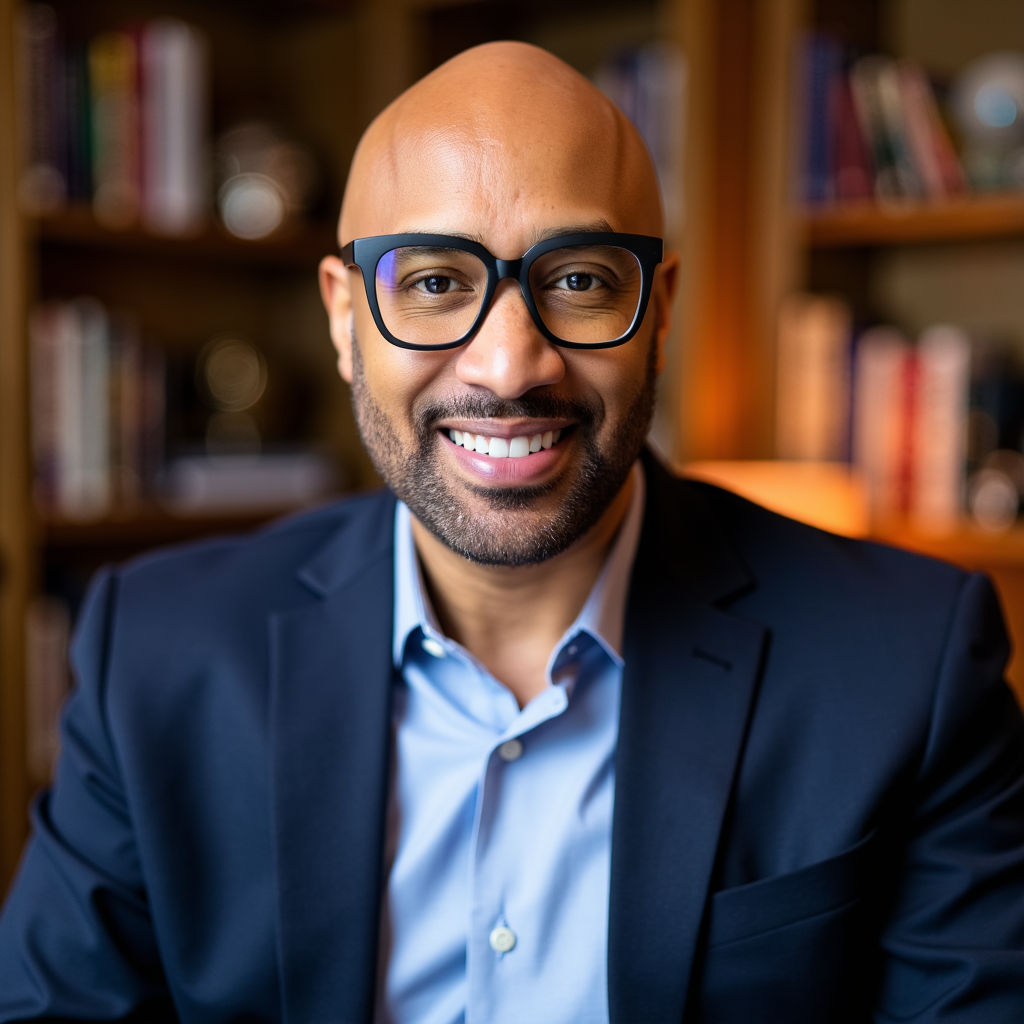
Terry Jones
Terry Jones is the Founder and Chief Career Strategist of the Career Advancement Blueprint and Executive Coach and Lead Consultant at FireBridge Consulting.
As an ICF Certified Accredited Career Coach and Certified Master Career Services professional, he partners with professionals at all levels, including senior leaders and executives, to navigate career transitions, secure new opportunities, and position themselves for advancement. His approach goes beyond surface level coaching, focusing on how individuals think, communicate, and lead so they can operate with clarity, authority, and strategic intent in high stakes environments.
In his work as an executive coach, Terry engages in high impact advisory conversations that help leaders strengthen decision making, elevate their presence, and align their leadership style with organizational expectations. He is known for helping clients translate their experience into influence, ensuring they are not only seen for what they have done, but trusted for what they are capable of leading next.
With over 20 years of corporate experience, including serving as a Vice President and leading Learning and Development functions for three New York City organizations, Terry brings a deep understanding of how companies evaluate talent, develop leaders, and make promotion decisions. This allows him to bridge the gap between individual ambition and organizational reality.
His insights have reached over 630,000 followers and generated more than 70 million video views, where he shares direct, experience driven guidance that helps professionals think differently and take action.