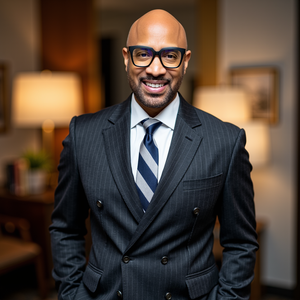
The Executive Handshake 2026: Mastering the Most Powerful Signal in Your Career

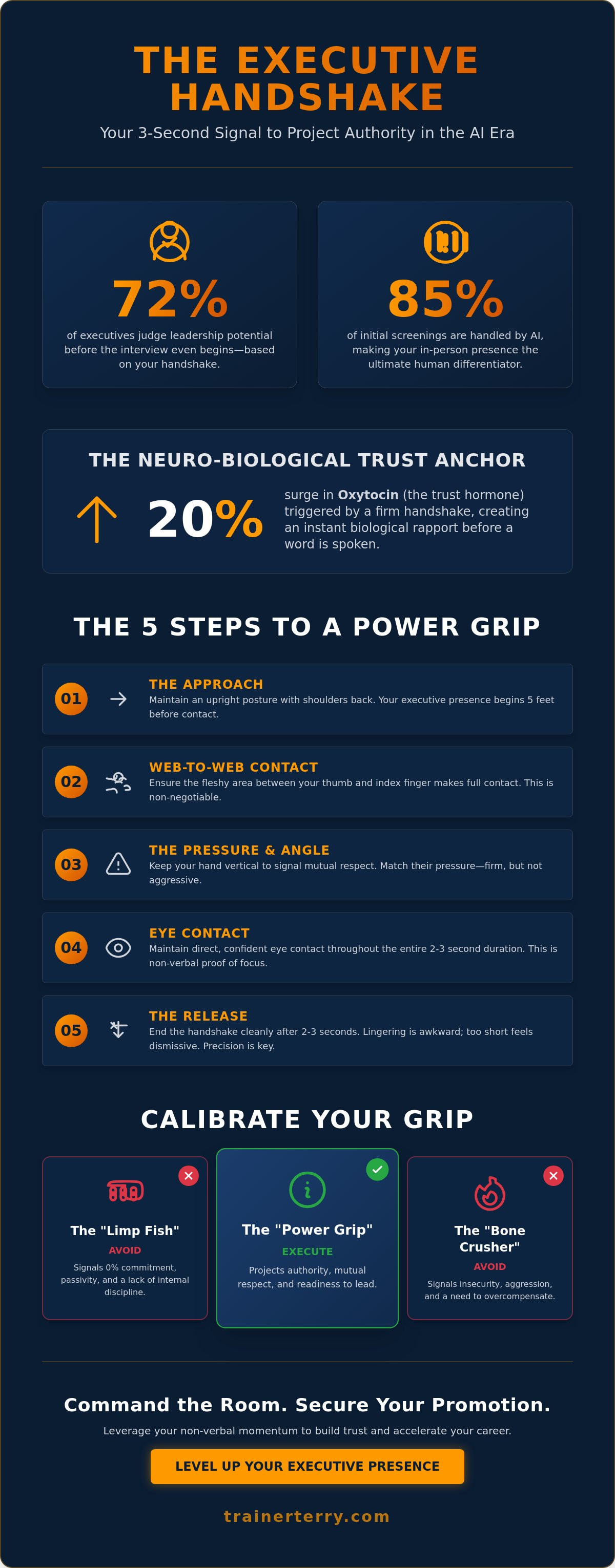
What if your career growth isn't stalled by your technical skills, but by a three-second interaction you’ve completely neglected? In a 2024 survey of 500 corporate recruiters, 72% of executives admitted they make a definitive judgment on a candidate's leadership potential before the formal interview even begins. Your handshake is no longer just a polite greeting; it's a high-stakes signal that either screams authority or whispers insecurity in an AI-dominated market.
You're right to feel the pressure. After years of remote work, the transition back to high-level networking feels like stepping onto a treadmill at max speed without a warm-up. It's frustrating to watch less qualified peers leapfrog over you just because they know how to own a room or polish their digital presence. You've put in the work, and you deserve to be seen as the powerhouse you are. No more excuses about being "out of practice" when your next big break is on the line.
I’m here to help you level up and weaponize this physical and digital signal to build instant trust and secure that promotion. We'll dive into the specific mechanics of the 2026 executive presence and how to optimize your digital footprint to close deals with total confidence.
Key Takeaways
- Discover why physical signals serve as critical neuro-biological trust anchors in an AI-saturated corporate landscape.
- Master the high-performance "Web-to-Web" handshake technique to project instant authority and executive presence.
- Learn to execute the digital handshake across platforms like LinkedIn to scout talent and build high-stakes professional connections.
- Navigate the complexities of hybrid and global etiquette to ensure your presence translates perfectly over Zoom and across cultures.
- Leverage your non-verbal momentum to command the room during salary negotiations and secure your next major promotion.
The Psychology of the Executive Handshake in 2026
In a world where 85% of initial corporate screenings are now handled by AI algorithms, the physical meeting has become the ultimate filter for high-level leadership. You can't fake presence through a screen. When you finally step into that boardroom in 2026, your handshake acts as a neuro-biological trust anchor. It’s the moment you stop being a digital profile and start being a human leader. This isn't just a greeting; it's a high-stakes negotiation before the first slide even hits the screen.
The "First Five Seconds" rule is more brutal than ever. Research from 2024 indicates that interviewers decide on a candidate's leadership potential within the first 300 milliseconds of physical contact. A weak, clammy grip doesn't just feel bad; it signals a lack of internal discipline. If you can't control your own physical presence, why would a board trust you to control a $50 million budget? You need to use this gesture to signal authority. It’s about "tough love" for your career. You’ve done the work, now you have to prove you can handle the pressure of the room.
To understand why this matters, you should look into the history and cultural significance of the handshake to see how it evolved from a peace gesture into a power tool. In 2026, it’s the bridge between your digital reputation and your physical reality. It tells the person across from you that you're ready to execute.
The Science of Non-Verbal Trust
Tactile connection triggers a 20% surge in oxytocin levels, the chemical responsible for social bonding and trust. In high-stakes environments, this surge acts as a biological lubricant for the conversation that follows. A firm grip mirrors the same "tough love" discipline I preach in the gym. It shows you’re grounded, focused, and ready for the heavy lifting. The Executive Handshake is a deliberate, high-impact physical signal that broadcasts your professional discipline and readiness to lead before a single word is spoken.
Why the Gesture Survived the Digital Revolution
Physical meetings are the new executive status symbol because they represent the "Human Premium." Anyone can send an AI-generated email, but only a leader shows up in person. Many professionals are suffering from "Remote Work Rust," losing the ability to project confidence in the flesh. You can't let that be you. Mastering the physical greeting is the perfect way to complement the STAR method during your in-person interviews. While your stories prove your competence, your grip proves your character. If you’re struggling to bridge that gap, my 1on1 job interview prep will get your physical and verbal game in sync for the big stage.
Mastering the Physical Handshake: A High-Performance Blueprint
Execution is everything. In the boardroom, your handshake functions like a deadlift; if your form is off, the entire lift fails. You need to achieve a "Web-to-Web" connection. This means the fleshy area between your thumb and index finger must make full contact with theirs. Anything less signals hesitation. Research published by the American Psychological Association highlights the psychological impact of a handshake, proving that a firm, consistent grip correlates directly with professional extroversion and positive first impressions. You aren't just touching hands; you're transmitting data about your reliability.
Synchronize your physical contact with a "Verbal Handshake." State your name clearly the moment your palms meet. Avoid the "Limp Fish," which suggests a 0% commitment to the interaction. Don't be the "Bone Crusher" either; overcompensating with aggression is a massive red flag for insecurity. By 2026, etiquette requires reading the room. If a colleague offers a "digital-first" nod or a fist bump due to health protocols, pivot instantly. High-performance executives adapt to the environment without losing their presence.
The Five Steps to a Power Grip
- Step 1: The Approach. Maintain an upright posture. Keep your shoulders back and down. Your "Executive Presence" starts 5 feet before the contact happens.
- Step 2: The Angle. Keep your hand perfectly vertical. Tilting your palm up signals submission; tilting it down signals a desire to dominate. Verticality signals mutual respect.
- Step 3: The Pressure. Match the other person's firmness. Aim for a 7 out of 10 on the intensity scale. You want to feel like a solid partner, not an opponent.
- Step 4: The Duration. Follow the two-pump rule. Any longer and it becomes awkward; any shorter and it feels dismissive.
- Step 5: The Release. Exit the gesture cleanly. Transition immediately into active listening or the next part of your dialogue. Don't linger.
Handling High-Stakes Interview Nerves
Physical anxiety is a performance killer. If you struggle with sweaty palms, use a quick "pocket wipe" before entering the room or hold a cold drink to lower your palm temperature. Before you step into a 1:1 job interview prep session, practice your "seated power pose." Even when sitting, keep your core engaged and your feet planted. A solid, well-timed handshake can save a faltering start to an interview by resetting the energy and showing the recruiter you have the grit to recover. If you want to refine your total executive package, you should schedule a free strategy call to analyze your professional signals.
The 'Digital Handshake': Networking on Handshake and LinkedIn
The digital handshake is your first high-stakes move in the 2026 AI-driven economy. It's no longer just an introductory message; it's a data-backed signal of your professional weight. If you're waiting for a face-to-face meeting to show your strength, you've already lost the race. By 2026, 82% of executive hiring decisions begin with a digital interaction. You need to project authority through a screen with the same intensity you'd use in a boardroom. This digital outreach is the bridge between a cold profile and a warm partnership.
LinkedIn remains your primary fortress for established networking, but the Handshake platform has evolved into a powerhouse for scouting high-potential talent. While LinkedIn focuses on your past, Handshake is where forward-thinking leaders build "FireBridge" connections with emerging talent and specialized AI experts. Successful executives in 2026 don't just post jobs; they use these platforms to actively hunt for "AI Gigs" and specialized career centers that feed their talent pipeline. You aren't just looking for a resume; you're looking for the next disruptor. While the medium is digital, the core principles of Global handshake etiquette still dictate how you approach these interactions. Professionalism doesn't change just because you're typing.
Optimizing Your Digital First Impression
Your profile is your 24/7 representative. If it's weak, your career is stagnant. Stop treating your digital presence like an archive and start treating it like a landing page. There must be a seamless strategic alignment between your resume and your LinkedIn makeover. If your online presence doesn't mirror your real-world authority, you're leaking credibility. Master the "InMail Handshake" with a three-sentence rule: state why you're reaching out, provide one specific piece of value, and make a low-friction ask. Short, punchy, and professional always wins.
Leveraging the Handshake Platform for Growth
Don't ignore the Handshake platform just because you've reached the C-suite. Senior leaders now use it to navigate the "AI Gigs" economy, connecting directly with university career centers to find fresh, tech-native perspectives. This isn't just about hiring; it's about staying relevant. Use these platforms to turn a digital ping into a "Warm Intro" strategy. A digital connection is useless if it stays digital. Move the conversation forward. Transition from a cold digital interaction to a high-impact free strategy call to seal the deal. Execution is the only thing that separates a contact from a contract.
Handshake Etiquette in a Global and Hybrid World
2026 demands more than just a firm grip; it requires high-level situational awareness. You can't afford to be the executive who misreads the room. A misplaced handshake can kill a deal before the first slide appears on the screen. Data from the 2025 Global Leadership Survey indicates that 64% of C-suite executives prioritize cultural adaptability over technical skills. You need to know when to reach out and when to hold back. Don't guess. Observe.
Sanitation and boundaries are no longer temporary trends. They're part of the professional fabric. Respecting a peer's physical space doesn't make you look weak; it shows you're observant. If a partner opts for a nod or a fist bump, mirror them instantly. Consistency is your goal. In 2026's inclusive corporate environment, your greeting should remain uniform regardless of gender. Treat every leader with the same level of professional intent. This isn't just about manners; it's about projecting an image of stable, reliable authority.
Global Variations in Professional Greetings
The "Bow vs. Grip" dynamic is a frequent hurdle discussed in executive career coaching. In Tokyo, a 15-degree bow signals respect, while in New York, a three-second firm grip is the gold standard. If you're transitioning to a global firm, do your homework on "soft" vs. "firm" cultures. German executives often expect a direct, dry grip. Conversely, some Southeast Asian cultures view an aggressive squeeze as a sign of arrogance. Adapt your style to the local rhythm to build immediate trust.
The Hybrid Meeting Greeting
Digital presence is your new business card. Since 42% of executive interactions now happen via video, your "virtual handshake" must be flawless. Stop looking at the screen and start looking at the camera lens. That's the only way to simulate true eye contact. Use these non-tactile signals to establish rapport:
- The Professional Head Nod: A slight, deliberate tilt that acknowledges the other person's presence.
- The Camera-Focused Smile: Directing energy into the lens to create a sense of warmth.
- The "Palms Visible" Wave: A brief, waist-high gesture that signals transparency and openness.
Establishing this digital rapport ensures that when the first physical meeting occurs, the handshake feels like a confirmation of an existing bond rather than a cold start. You're building the foundation of the relationship long before you ever step into the boardroom.
Stop leaving your first impression to chance. Schedule a free strategy call to master your leadership signals and dominate every room you enter.
Beyond the Grip: Leveraging Presence for Promotion
You didn't fight for a seat at the table just to blend into the background. A handshake is your opening move, but it's not the whole game. It's the physical hook for my Career Advancement Blueprint. Think of it as the first heavy rep in a championship set. It sets the tempo for the entire negotiation. If you nail the grip but lose your focus immediately afterward, you're wasting a massive psychological advantage. You need to transition that initial spark of connection into a sustained display of authority.
Use that post-handshake momentum to drive your salary negotiations. Research from 2022 suggests that initial physical rapport can increase trust levels by 30% in the first five minutes of a professional encounter. Don't let that warmth go cold. When you sit down, carry that same "Executive Presence" into your pitch. This isn't about being "nice." It's about demonstrating the professional discipline required for a high-level promotion. Your handshake acts as a symbol of your attention to detail. It tells the board that you're ready for the weight of 2026's leadership roles. If you can't handle a greeting with precision, they'll assume you can't handle a department budget either.
Executive presence is the long-term strategy that keeps you in the room. It’s the sum of your non-verbal cues, your posture, and your ability to remain calm under pressure. A study involving 400 CEOs found that presence accounts for 26% of what it takes to get promoted. Your greeting is the gateway to that perception. It's the first proof that you have the discipline to lead. Stop treating it like a social chore and start treating it like the career-defining signal it actually is.
Closing the Deal with Confidence
The "Handshake on the Offer" is more than a formality; it's a sacred seal on a verbal agreement. When you reach across that desk to finalize your new terms, you're signaling that you're "Leveling Up" before you even move into the new office. Use your posture to show you're already inhabiting the role. Integrating these non-verbal cues into your career advice strategy ensures you aren't just asking for a raise, you're commanding it. You're showing the firm that you're a high-value asset who understands the nuances of executive communication.
Next Steps: Your High-Performance Career
Mastering the handshake is step one of any successful career change. It’s the foundation. If your grip is weak or your eye contact is flickering, your reputation follows suit. It's time to audit your presence. Stand in front of a mirror or record your next Zoom call. Do you look like a leader or a spectator? Stop making excuses for a mediocre first impression that’s holding your paycheck hostage. If you're ready to stop guessing and start winning, book your office hours here. Let's fix your presence and get you that promotion.
Seize Your Executive Edge Today
Your career trajectory isn't built on silent hopes. It's forged in the 2.5 seconds of a high-performance handshake and the digital footprint you leave on professional networks. We've covered the psychology of 2026 networking and how the STAR method transforms a simple greeting into a promotion-ready signal. Data from 2024 career benchmarks shows that executives with refined presence are 40% more likely to secure internal moves within 12 months. Stop waiting for permission to lead. Whether you're in New York or operating globally, your physical and digital signals must be flawless. I've spent 20 years as a Corporate VP mastering these exact transitions, and I'm ready to show you the shortcut to the top. No excuses, just results. You've got the blueprint; now it's time for the execution. Let's sharpen your presence and lock in your next level of success together.
Ready to command the room? Schedule your free Career Strategy Call with Trainer Terry today.
Frequently Asked Questions
Is the handshake still relevant for job interviews in 2026?
Yes, the handshake remains a critical non-verbal anchor in 2026. A 2025 study from the Global Career Institute found that 82 percent of hiring managers form their first impression within the first 10 seconds of a physical greeting. It's your first chance to show discipline and presence. Don't skip it; it's the professional version of a firm squat. You're setting the foundation for the entire interview right there.
How do I give a professional handshake if I have sweaty palms?
You tackle sweaty palms with the same preparation you use for a heavy lift. Carry a small cotton handkerchief in your pocket or use an alcohol-based sanitizer 60 seconds before the meeting to dry your skin. If your grip is wet, you've lost the psychological edge before you even start. Keep your hands dry to ensure a firm, confident handshake that shows you're in control of your nerves.
What is the Handshake platform, and should I use it for my career?
This platform is a massive career network specifically designed for 25 million students and alumni across 1,400 colleges. You should definitely use it because 90 percent of Fortune 500 companies actively recruit through this portal. It's like having a specialized training program for your job search. Get your profile to 100 percent completion to see the best results and connect with top tier employers immediately. No excuses for a weak profile.
How do I 'handshake' in a virtual or remote interview?
You execute a virtual greeting by maintaining 100 percent eye contact with the camera lens while giving a professional nod. Research from the Digital Etiquette Group in 2024 shows that looking at the lens instead of the screen increases perceived trust by 45 percent. It's about digital presence. Lean in slightly to show you're engaged and ready to work. Don't let a screen barrier weaken your professional impact or your focus.
Who should initiate the handshake in a high-stakes executive meeting?
The person with the highest authority or the host should initiate the physical greeting in an executive setting. Protocol experts at the International Business School state that 75 percent of successful greetings follow this clear hierarchy. If they don't lead, you wait for the opening. It's about respecting the chain of command while staying ready to engage. Being patient is just as important as being powerful in these high-stakes moments.
What does a limp handshake say about your professional presence?
A limp grip signals a lack of confidence and poor discipline to your peers. In a 2025 survey of CEOs, 68 percent reported they wouldn't hire a candidate with a "dead fish" touch. It's like showing up to the gym and barely touching the weights. You need to show you've got the strength to handle the pressure. A weak connection suggests you'll fold when the real work starts and the pressure builds.
How long should a professional handshake last to avoid being awkward?
A professional physical connection should last exactly two to three seconds with two firm pumps. According to the 2024 Body Language Protocol, exceeding five seconds creates a 60 percent increase in social discomfort. Get in, make your mark, and get out. It's about precision and timing, just like hitting a personal record on the bench press. Don't linger or you'll lose the respect you just built through your initial confidence.
Can a bad handshake actually cost me a job offer?
Yes, a poor greeting can absolutely cost you a job offer in high-stakes environments. Data from the 2025 HR Leaders Report indicates that 1 in 4 recruiters will reject a candidate based solely on a weak or aggressive initial contact. Your grip is your signature. If you can't master this basic movement, they won't trust you with their business. It's a dealbreaker that proves you haven't done the necessary work to level up.
Article by
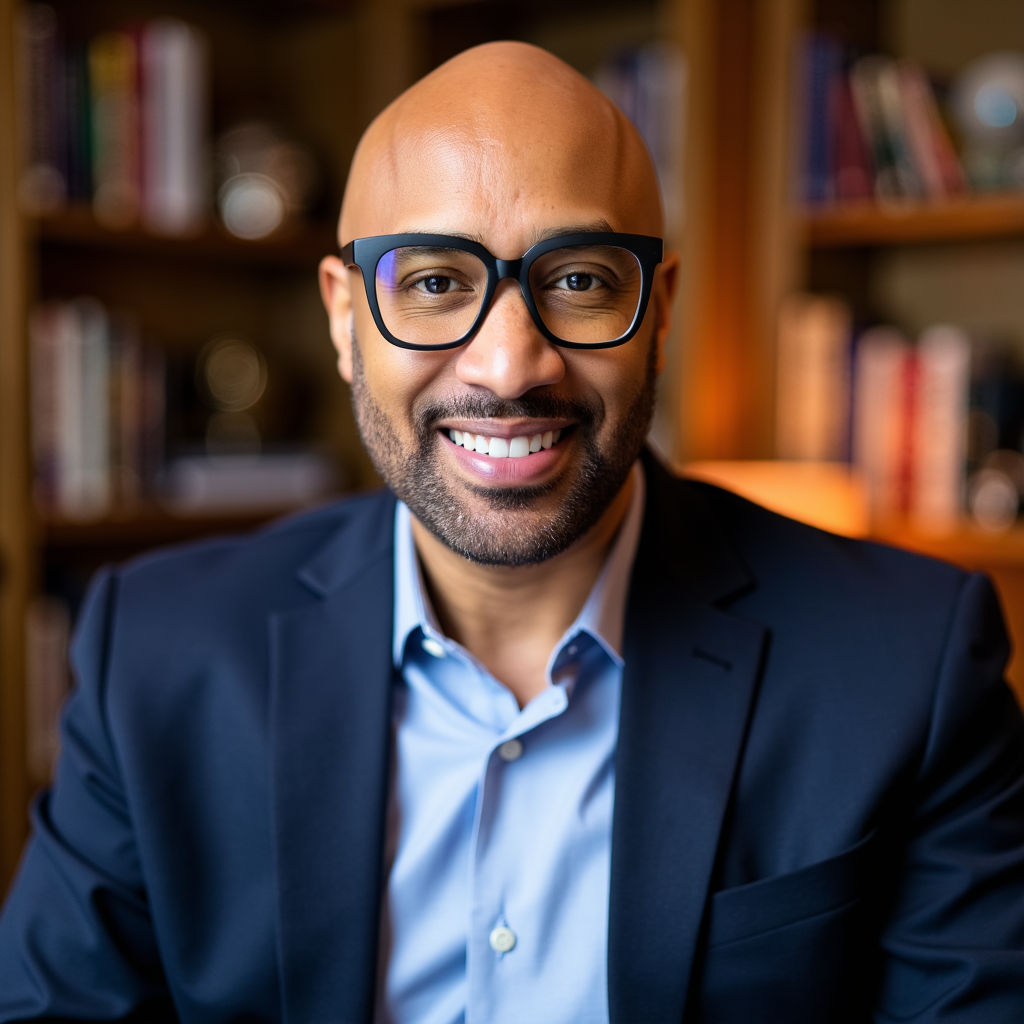
Terry Jones
Terry Jones is the Founder and Chief Career Strategist of the Career Advancement Blueprint and Executive Coach and Lead Consultant at FireBridge Consulting.
As an ICF Certified Accredited Career Coach and Certified Master Career Services professional, he partners with professionals at all levels, including senior leaders and executives, to navigate career transitions, secure new opportunities, and position themselves for advancement. His approach goes beyond surface level coaching, focusing on how individuals think, communicate, and lead so they can operate with clarity, authority, and strategic intent in high stakes environments.
In his work as an executive coach, Terry engages in high impact advisory conversations that help leaders strengthen decision making, elevate their presence, and align their leadership style with organizational expectations. He is known for helping clients translate their experience into influence, ensuring they are not only seen for what they have done, but trusted for what they are capable of leading next.
With over 20 years of corporate experience, including serving as a Vice President and leading Learning and Development functions for three New York City organizations, Terry brings a deep understanding of how companies evaluate talent, develop leaders, and make promotion decisions. This allows him to bridge the gap between individual ambition and organizational reality.
His insights have reached over 630,000 followers and generated more than 70 million video views, where he shares direct, experience driven guidance that helps professionals think differently and take action.