Career Change at 40 With No Degree: The 2026 Strategic Pivot Guide
What if your lack of a college degree isn't the roadblock you think it is, but actually your greatest competitive advantage in 2026? You've spent two decades delivering real-world results, yet you're still worried that an automated filter will toss your career into the trash because of a missing line on your resume. It's a common fear. You feel the pressure of ageism and the nagging doubt of imposter syndrome while younger candidates flash their fresh diplomas. Stop overthinking the paper and start owning your output.
We're putting an end to that hesitation right now. You don't need to go back to school to win. This guide shows you exactly how to leverage experience for a career change at 40 to bypass traditional HR gatekeepers and secure a high-performance role. Recent data from 2026 shows that 82% of career changers over 45 find success in their new roles because employers are finally prioritizing proven skills over degrees. We'll provide a clear roadmap to turn your street cred into a high-paying reality. You'll gain the confidence to out-execute the competition and finally own your professional future.
Key Takeaways
Understand why 2026 is the peak year for skills-based hiring as major corporations scrap degree requirements for high-performance veterans.
Master exactly how to leverage experience for a career change at 40 by quantifying your "street cred" into high-value impact statements.
Learn how to optimize your resume and LinkedIn profile to bypass automated filters and put your 20-year ROI ahead of formal education.
Identify the specific industries that prioritize real-world leadership and discover which micro-credentials actually move the needle in your pivot.
Get a structured roadmap for your transition using the Career Change Blueprint to ensure you don't just change jobs, but upgrade your career.
Table of Contents
The 2026 Skills-First Economy: Why a Degree Matters Less at 40
Beating the ATS: Positioning Yourself Beyond the Education Section
The 2026 Skills-First Economy: Why a Degree Matters Less at 40
Stop overthinking the paper you don't have. The 2026 job market has undergone a massive structural shift. Companies are no longer obsessed with where you went to school twenty years ago. They care about what you can do today. Skills-first hiring is the prioritisation of proven competencies over formal credentials. It's a pragmatic response to an automated world where execution is the only currency that matters. If you've been delivering results for two decades, you already have the "certificate" that top-tier employers are hunting for.
The gap between entry-level filters and mid-career evaluation is wider than ever. While a 22-year-old needs a degree to prove they can finish a task, you have a 20-year track record of solving problems, managing people, and hitting targets. This is the Experience Premium. You aren't competing on theoretical knowledge; you're competing on real-world ROI. Understanding how to leverage experience for a career change at 40 starts with realizing that your past performance is your strongest credential.
The Death of the Mandatory Degree Requirement
Fortune 500 companies are leading the charge. According to LinkedIn research from February 2026, employers are increasingly prioritizing skills over traditional career paths. They want plug-and-play talent. They need leaders who can step into a high-performance role and stabilize a team without a six-month learning curve. A degree is a signal of potential; 20 years of work is a guarantee of performance. Major corporations have stripped degree filters from their senior-level job descriptions because they realized these filters were blocking the very experts they needed to hire.
Why 40 is the Strategic Sweet Spot
Many professionals at this age feel a sense of unease, often mislabeled as a psychological crisis, when they realize their current path no longer fits. It isn't a crisis. It's a signal that you've outgrown your current environment. At 40, you possess a unique blend of energy and stability that younger candidates simply haven't developed. You have the professional wisdom to navigate office politics and the network to bypass standard HR gates entirely.
You aren't behind. You're seasoned. Your professional network is a living, breathing database of opportunities that a diploma can't touch. If you're ready to stop guessing and start executing a real transition, it's time to look at a Career Positioning Strategy that highlights your street cred. Don't let a missing piece of paper dictate your worth. You have the skills. Now, let's position them for the 2026 market.
Inventory of Value: Quantifying 20 Years of Street Cred
Most career advice for people over 40 is insulting. It suggests you should start over in an entry-level role just because you're switching industries. That's a waste of your talent and your time. You aren't a beginner. You're a high-performance professional with two decades of "street cred" that no classroom can replicate. Stop looking at your past as a list of job titles. Start looking at it as a portfolio of results. Knowing how to leverage experience for a career change at 40 means moving beyond what you were called to what you actually delivered.
Think about the fires you've put out. Think about the teams you've stabilized and the budgets you've salvaged. These aren't just "tasks." They are revenue-driving outcomes. When you audit your value, you're looking for the ROI you provided to your previous employers. This shift in perspective is what separates people who get stuck in HR filters from those who get recruited for their wisdom. If you’re struggling to see the patterns in your own history, let’s talk through a Career Positioning Strategy to map out your next move.
The STAR Method for Value Extraction
The STAR method isn't just for the interview room. It's your primary tool for self-assessment. I want you to find five "Hero Stories" from your last 20 years. For each story, define the Situation, Task, Action, and the specific, measurable Result. Did you increase efficiency by 15%? Did you reduce turnover? These stories prove your competence without needing a degree to back them up. You can find more detail on mastering the STAR method to sharpen these narratives.
Identifying Your Signature Skill Set
What is the one thing you do better than anyone else? Maybe you're a master of operational chaos or a genius at client retention. This is your Signature Skill. It's the bridge that allows you to move from retail management into corporate operations or from healthcare into tech. Your Signature Skills create a competitive moat that degrees cannot touch. While a younger candidate has the theory, you have the proven execution. This is your leverage.
Don't ignore your "Hidden Degree" either. The specialized training, on-the-job mastery, and internal certifications you've earned are incredibly valuable. Current Bureau of Labor Statistics employment data highlights that the market is hungry for experienced workers who can demonstrate these specific competencies. You've spent 20 years building a massive inventory of value. It's time to stop hiding it and start using it to secure the role you actually deserve.
Beating the ATS: Positioning Yourself Beyond the Education Section
Stop letting a robot dictate your professional worth. Most professionals over 40 fear the Applicant Tracking System (ATS) because they think it's programmed to hunt for degrees. It isn't. The ATS is looking for keywords that signal competence and results. If you optimize your profile correctly, the machine won't care about a missing diploma. Your resume's primary job is to sell a solution before the recruiter even scans your education section. This is exactly how to leverage experience for a career change at 40 without getting stuck in the digital trash bin.
Your first move is a tactical layout shift. Move your education section to the very bottom of the document. Leads with an Executive Summary that acts as your "Elevator Pitch" in print. Instead of stating what you want, state what you provide. Use industry-standard terms to bypass automated filters. Focus on highlighting transferable skills that prove you can execute from day one. If you need a visual guide on how to balance these elements, check out these resume examples to see the 2026 strategic layout in action.
LinkedIn Branding for the Degree-Free Professional
Your LinkedIn headline is prime real estate. Don't waste it on a generic job title. Use it to broadcast the ROI you deliver. Instead of "Operations Manager," try "Operations Leader | Delivering 20% Efficiency Gains | 20 Years of Strategic Execution." This forces recruiters to see your value before they ever click on your profile. Your "About" section should tell a narrative of growth and consistent impact. You can master how to use LinkedIn to build an executive brand that makes your lack of a degree irrelevant.
The Career Narrative Script
Confidence is your best defense. When someone asks about your education, don't apologize. Own your path. You need a script that reframes your experience as a deliberate choice. Try this: "I chose to build 20 years of frontline expertise, which has given me the practical leadership and problem-solving skills that a classroom simply can't provide." This isn't just an answer. It's a positioning statement. It proves you're a practitioner, not just a theorist. You aren't lacking a degree; you're overflowing with 20 years of high-performance results. That's a trade any smart hiring manager will take.
The 2026 Roadmap for a Degree-Free Career Pivot
Execution is the only thing that separates a dreamer from a high-earner. You've already audited your value and optimized your brand. Now it's time to move. This isn't a slow crawl; it's a strategic offensive. Understanding how to leverage experience for a career change at 40 requires a systematic approach that bypasses the traditional, slow-moving HR machine. Stop waiting for permission and start following the blueprint.
Your first step is the Market Research Phase. You aren't looking for just any job. You're looking for industries where your 20 years of experience is a sign of authority, not a liability. Once you've picked your target, perform a Gap Analysis. Don't sign up for a four-year program. Identify the one or two micro-credentials that bridge the gap between your "street cred" and the new industry's specific language. This is about surgical precision, not academic fluff. You're adding a tool to your belt, not rebuilding the entire workshop.
Next, launch your Networking Offensive. Bypassing HR is the only way to avoid the degree filter entirely. You need to speak directly to decision-makers who are currently feeling the pain your experience can solve. Reach out, offer a solution, and demonstrate your ROI before they even ask for a resume. When you do get the meeting, execute the Interview Blitz. Use the Hero Stories we discussed earlier to prove you can deliver results on day one. If you're ready to stop stalling and start winning, it’s time to apply for the Career Change Blueprint and lock in your strategy.
Targeting Experience-Heavy Industries
Focus your energy where it's valued. Sectors like Sales Leadership, Operations, Logistics, and Project Management are desperate for "plug-and-play" talent in 2026. These industries prioritize having been in the trenches over having studied them. Look for companies with a documented culture of internal promotion. They value loyalty and proven execution, making them the perfect landing spot for a mid-career veteran. They don't want a trainee; they want a fixer who knows how to handle high-stakes pressure.
The 90-Day Transition Sprint
Analysis paralysis is the enemy of progress. You need a deadline. A successful pivot at 40 shouldn't take years; it should take a focused 90-day sprint. Allocate specific blocks of time each week for direct outreach and strategy refinement. Consistency is the key to building momentum. If you find yourself hitting a wall or overthinking your next move, use Trainer Terry’s Office Hours to get immediate feedback and stay on track. This is a high-stakes pivot. Don't leave the execution to chance. Move fast, adjust often, and stay focused on the result.
Executing the Career Change Blueprint with Trainer Terry
You've reached the point where theory must meet execution. A generic career coach won't help you navigate a high-stakes pivot at 40 because they don't understand the nuances of mid-career value. They focus on fonts and margins. We focus on ROI and market positioning. When you're figuring out how to leverage experience for a career change at 40, you need a mentor who has sat on the other side of the desk. Stop settling for templates meant for entry-level graduates and start using a system built for veterans.
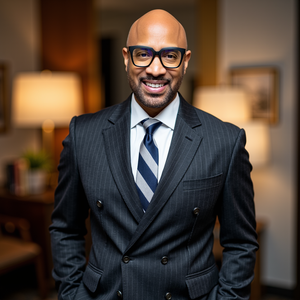
Terry’s background as a VP means he knows exactly what hiring managers look for when they scan a candidate who lacks a formal degree. He doesn't guess; he executes. The Career Change Blueprint isn't just a guide. It's a structured curriculum designed for professionals who have 20 years of results but need a new arena to showcase them. We strip away the academic fluff and focus on showing you exactly how to leverage experience for a career change at 40 by highlighting the street cred that actually drives salary offers.
Personalized Strategy vs. Generic Advice
Every industry has its own set of gatekeepers. A strategy that works in logistics might fail in tech operations. You need a personalized approach to overcome specific industry hurdles and refine your career narrative. Generic advice won't save you from a sharp interviewer who is looking for a reason to say no. You need to schedule a free strategy call to audit your pivot plan and ensure your narrative is bulletproof before you hit the market.
High-Level Interview Preparation
The interview is where most degree-free professionals feel like underdogs. That stops now. You aren't there to beg for a job; you're there to consult on a problem. By mastering high-level interview strategies, you'll learn to dominate behavioral questions using the STAR method we established earlier. It's about delivery, presence, and authority. Access 1-on-1 job interview prep to polish your delivery and walk into that room as the obvious solution.
The 2026 market is moving fast. Don't let another year pass in a role that doesn't respect your two decades of work. The roadmap is clear. The strategy is ready. It's time to take the first step toward your promotion-ready future. Stop overthinking and start executing. Your experience is your greatest asset. It's time the market paid you what it's worth.
Stop Stalling and Own Your 20-Year Advantage
The 2026 job market is done waiting for diplomas. It’s hunting for execution. You've learned that your street cred is a quantifiable asset and that the ATS can be defeated with the right strategic positioning. You now have the roadmap to move from being an applicant to becoming a solution. Understanding how to leverage experience for a career change at 40 isn't about looking backward with regret; it's about weaponizing your past results to secure a high-performance future.
You need a strategy backed by real-world authority. Led by a former Corporate VP with over 20 years of HR experience, our approach focuses on STAR method mastery and custom LinkedIn positioning that forces hiring managers to see your value first. Don't let another year slip away in a role that doesn't challenge you. You have the skills and the drive. Now you just need the right positioning to break through the noise.
Stop guessing and start pivoting; apply for the Career Change Blueprint today.
Your next chapter starts the moment you decide to stop playing it safe. The results you've built over two decades are your greatest currency. Let's get to work and make sure the market pays you what you're actually worth.
Frequently Asked Questions
Is 40 too late to change careers without a degree?
Absolutely not. The average age for a career change is 39, meaning you're standing right at the starting line of your most productive professional years. Statistics from early 2026 show that workers aged 45 and older have an 82% success rate in new roles. Your 20 years of real-world results is a high-value asset that younger candidates simply can't match in a skills-first economy.
How do I bypass ATS filters that require a Bachelor’s degree?
You bypass these filters by front-loading your resume with industry-specific keywords and placing your education section at the very bottom. Most ATS systems in 2026 are looking for specific competencies and measurable ROI rather than just checkboxes. Additionally, networking directly with decision-makers allows you to skip the automated gatekeepers entirely and present your value to a human who understands performance.
What are the best-paying jobs for 40-year-olds with no degree?
High-performance roles in Sales Leadership, Operations, Logistics, and Project Management are among the best-paying paths for veterans without degrees. These sectors prioritize proven execution and the ability to handle high-stakes pressure over academic credentials. Companies are desperate for "plug-and-play" talent who can stabilize teams and drive revenue from day one without a long, expensive learning curve.
Should I go back to college at 40 or just get certifications?
Focus on strategic certifications or micro-credentials that offer immediate ROI. For a mid-career professional, the time and debt required for a full four-year degree rarely pay off. Identify the 1-2 certifications that are actually respected in your target industry. This bridges the gap between your existing expertise and new industry standards without the massive time commitment of traditional college.
How do I explain my lack of a degree during a job interview?
Own your path with a confidence-backed script that reframes your experience as a deliberate choice. Instead of apologizing, explain that you chose to build 20 years of frontline expertise and leadership. Highlight how to leverage experience for a career change at 40 by showing that your practical problem-solving skills are more valuable than theoretical knowledge. Most hiring managers value a fixer who has survived the trenches.
Can I move into management at 40 if I don’t have a degree?
Yes, you can move into management because leadership is a skill developed through action, not textbooks. Major corporations are increasingly removing degree requirements for senior roles, recognizing that 20 years of managing people and budgets is the ultimate qualification. Your ability to navigate office politics and stabilize teams makes you a prime candidate for executive-level oversight in experience-heavy industries.
What if my experience is in a completely different industry?
Your previous industry doesn't matter as much as your "Signature Skills." Whether you were in retail, healthcare, or manufacturing, the ability to manage operations, lead teams, or drive efficiency is universal. The key is translating your past tasks into the specific language and revenue-driving outcomes of your new target field. This proves you're a high-performance professional who can execute in any environment.
How long does a career change at 40 usually take?
A successful career transition typically takes between 6 and 18 months, but you can accelerate this with a focused 90-day sprint. This timeline includes your research, gap analysis, and networking offensive. By following a structured roadmap and avoiding analysis paralysis, you can move from your current role into a higher-paying position without spending years in a classroom.
Article by
Terry Jones
Terry Jones is the Founder and Chief Career Strategist of the Career Advancement Blueprint and Executive Coach and Lead Consultant at FireBridge Consulting.
As an ICF Certified Accredited Career Coach and Certified Master Career Services professional, he partners with professionals at all levels, including senior leaders and executives, to navigate career transitions, secure new opportunities, and position themselves for advancement. His approach goes beyond surface level coaching, focusing on how individuals think, communicate, and lead so they can operate with clarity, authority, and strategic intent in high stakes environments.
In his work as an executive coach, Terry engages in high impact advisory conversations that help leaders strengthen decision making, elevate their presence, and align their leadership style with organizational expectations. He is known for helping clients translate their experience into influence, ensuring they are not only seen for what they have done, but trusted for what they are capable of leading next.
With over 20 years of corporate experience, including serving as a Vice President and leading Learning and Development functions for three New York City organizations, Terry brings a deep understanding of how companies evaluate talent, develop leaders, and make promotion decisions. This allows him to bridge the gap between individual ambition and organizational reality.
His insights have reached over 630,000 followers and generated more than 70 million video views, where he shares direct, experience driven guidance that helps professionals think differently and take action.